
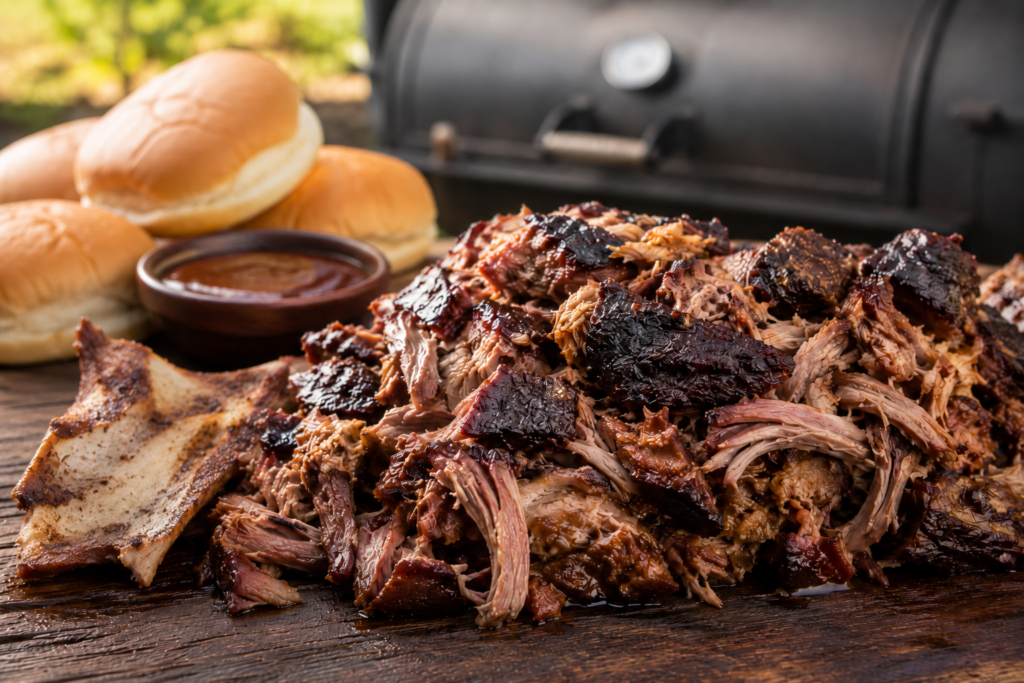
Smoked pulled pork butt is one of the best recipes for learning real low-and-slow barbecue. Pork butt is affordable, forgiving, packed with marbling, and capable of feeding a crowd. When it is seasoned generously, cooked over clean smoke, wrapped at the right time, and rested before pulling, the result is tender pork with dark bark, rich smoke flavor, and plenty of moisture.
This smoked pulled pork butt recipe follows the Backyard Smoke Lab method: start with an 8- to 10-pound bone-in Boston butt, add flavor with a simple injection and sweet-smoky rub, smoke at 250°F, wrap after the bark is set, cook until probe tender, and rest before shredding.
The process takes time, but it is not difficult. Control the smoker temperature, use clean smoke, and let the pork tell you when it is finished.
Smoked Pulled Pork Butt Recipe at a Glance
- Pork: 8- to 10-pound bone-in pork butt
- Smoker temperature: 250°F
- Wood: Hickory, apple, cherry, pecan, or a blend
- Wrap temperature: About 165°F, after the bark is set
- Finishing temperature: Usually 200°F to 205°F
- Doneness test: A probe slides into several areas with almost no resistance
- Estimated cook time: 10 to 14 hours, plus resting time
- Resting time: At least 1 hour; 2 to 4 hours is excellent
- Yield: Approximately 10 to 14 servings
Cook time is only an estimate. The size and shape of the pork, smoker type, outdoor temperature, wrapping method, and temperature stability can all change the schedule.
Always cook until the pork is tender rather than removing it from the smoker simply because the clock says it should be done.
Ingredients for Smoked Pulled Pork Butt
For the Pork Butt
- One 8- to 10-pound bone-in pork butt, also called Boston butt
- Yellow mustard or another light binder
- Apple juice for the injection and wrapping
- Apple cider vinegar, optional
- Heavy-duty aluminum foil or unwaxed butcher paper
BSL Pork Injection
- 1/3 cup Meat Church Hog Injection
- 1 cup apple juice
Mix the injection powder and apple juice until fully dissolved. Inject the mixture throughout the pork butt in a grid pattern, approaching the meat from several angles so the liquid is distributed instead of concentrated in one area.
Injection is optional, but it adds seasoning and moisture deeper inside the meat. A well-marbled pork butt can still turn out excellent without it. Here’s the injector I use.
BSL Sweet and Smoky Pork Rub
- 1/2 cup brown sugar
- 1/4 cup paprika
- 1 tablespoon kosher salt
- 1 tablespoon coarse black pepper
- 1 tablespoon garlic powder
- 1 tablespoon onion powder
- 1 teaspoon cayenne pepper
Combine all the ingredients thoroughly. Break apart any clumps of brown sugar before applying the rub.
Choosing and Trimming the Pork Butt
For the best smoked pulled pork butt, choose a bone-in Boston butt with visible marbling. An 8- to 10-pound cut provides plenty of meat for a gathering and has enough mass to remain moist during the long cook.
Avoid a pork butt that looks unusually lean. The internal marbling and connective tissue help protect the pork during the cook and contribute to its rich, pull-apart texture.
Remove the pork from its packaging and pat it dry with paper towels. Trim away loose flaps of meat, hard waxy fat, and thin edges that may burn.
If the fat cap is especially thick, reduce it to approximately 1/4 inch. Do not remove every bit of exterior fat. The goal is to create an even surface that accepts seasoning and develops bark while leaving enough fat to protect the meat.
How to Season Smoked Pulled Pork Butt
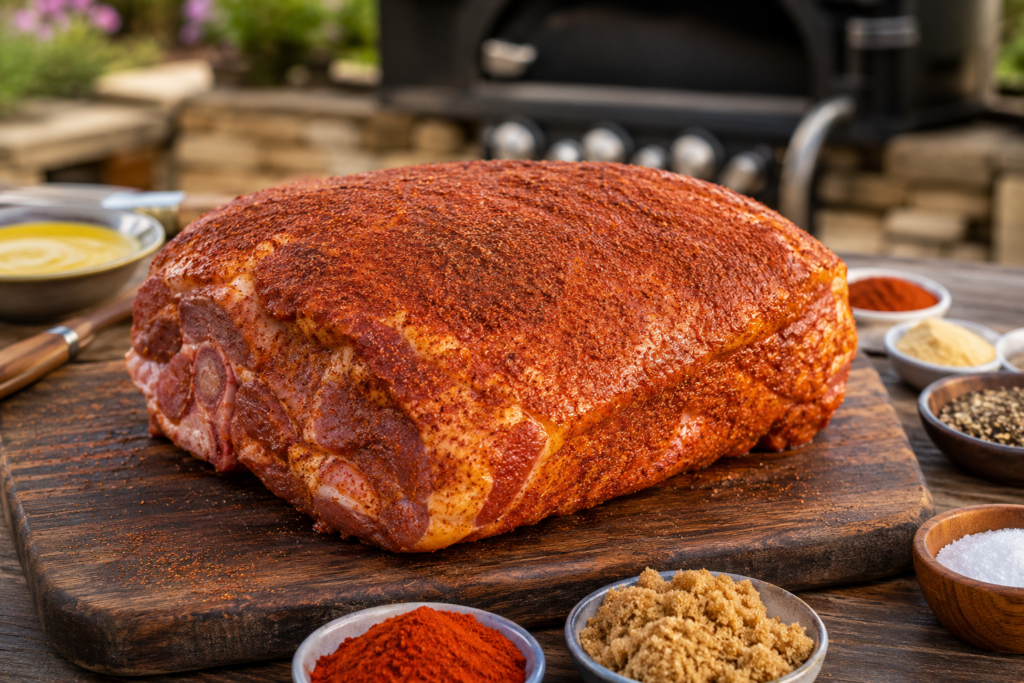
Inject the pork first, then blot away any liquid that escapes onto the surface.
Apply a thin coat of yellow mustard as a binder. The mustard flavor will not dominate the finished pork. It simply helps the rub stick evenly.
Season every side generously with the BSL sweet and smoky pork rub. Pork butt is a large, thick cut, so a light dusting is not enough.
Press the seasoning onto the meat instead of rubbing it back and forth. Rubbing can cause the seasoning to clump or wipe away.
Let the seasoned pork sit for 30 to 60 minutes while the smoker heats. You can also season it the night before, place it in the refrigerator, and remove it while the smoker comes to temperature.
Best Smoker Temperature and Wood
Set the smoker to 250°F and allow it to stabilize before adding the pork.
A steady cooking temperature is more important than hitting exactly 250°F every minute. Normal swings of 10 to 15 degrees will not ruin the cook.
Hickory gives smoked pulled pork butt a strong, traditional barbecue flavor. Apple and cherry are milder and slightly sweet. Oak is balanced and versatile, while pecan adds a softer, nutty flavor.
My preferred approach is hickory by itself or hickory blended with apple or cherry. Want more wood info? Check out this article 👉 The Ultimate Guide to Wood Selection for BBQ: Flavor, Fuel & Fire Control
The smoke should be thin and clean. Heavy white smoke can leave the pork with a bitter or harsh flavor. On a charcoal or offset smoker, wait until the fire is burning cleanly before adding the meat.
A water pan can help stabilize the cooking environment and catch drippings, especially in a charcoal smoker or offset. It is helpful, but it is not required for every smoker design.
How to Smoke Pulled Pork Butt Step by Step
1. Place the Pork Butt on the Smoker
Place the pork butt on the cooking grate with the thicker portion facing the hotter side of the smoker.
Position the fat cap toward the primary heat source. On many pellet smokers, the heat comes mainly from below, so fat-side down can help protect the meat. On an offset smoker, turn the fat cap toward the firebox.
Insert a leave-in temperature probe into the thickest part of the pork, avoiding the shoulder blade bone.
Close the lid and resist the urge to repeatedly check the meat. Every lid opening releases heat and extends the cooking time.
2. Smoke Until the Bark Is Set
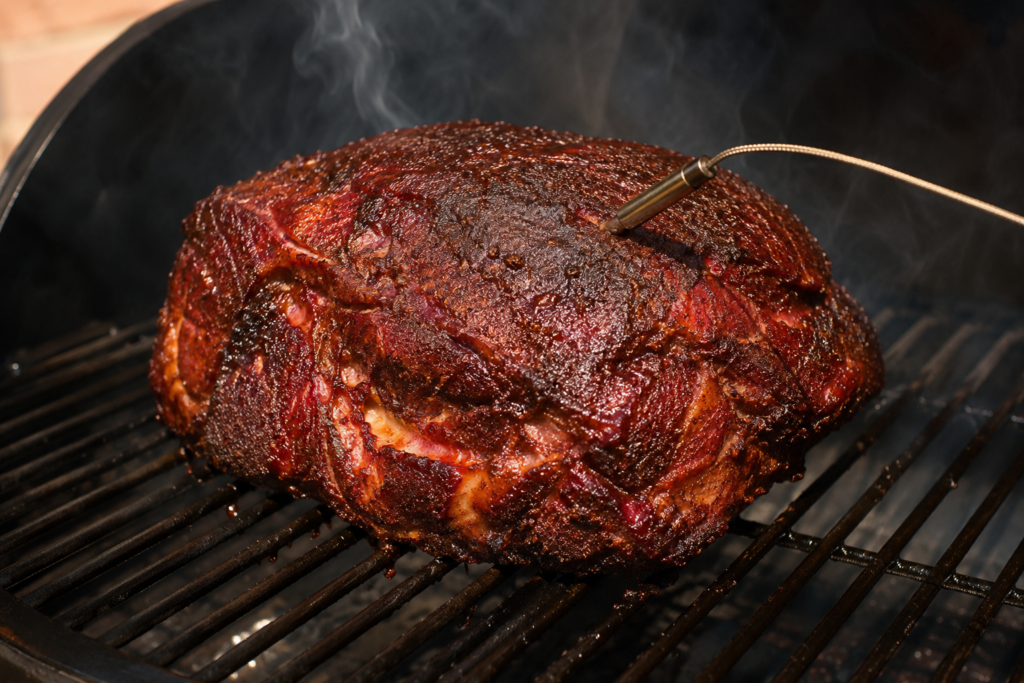
Smoke the pork butt at 250°F until the exterior becomes dark mahogany and the seasoning no longer wipes away when lightly touched.
This commonly happens near an internal temperature of 160°F to 170°F.
The temperature may appear to stop climbing during this stage. This is known as the stall. Moisture evaporating from the surface cools the pork and slows the rise in internal temperature.
The stall is normal. Do not panic or suddenly increase the smoker temperature.
You can lightly spritz dry areas with a mixture of apple juice and apple cider vinegar after the first few hours. Do not soak the bark. Spritz only when the surface looks dry, and keep the smoker lid open as briefly as possible.
3. Wrap the Pork Butt
Once the bark is dark, firmly set, and the internal temperature is around 165°F, remove the pork and wrap it tightly.
Heavy-duty foil gives you the fastest cook and captures the most liquid. Butcher paper allows more evaporation and generally preserves a firmer bark.
For a juicy and dependable smoked pulled pork butt recipe, I prefer foil.
Place the pork in the center of two overlapping sheets of heavy-duty aluminum foil. Add a small splash of apple juice or a mixture of apple juice and apple cider vinegar.
Do not add so much liquid that it washes away the bark.
Wrap the pork tightly and return it to the smoker with the foil seam facing upward.
➡ Here’s my article on Wrap vs No Wrap BBQ.
4. Cook Until Probe Tender
Continue cooking the wrapped pork at 250°F. Begin checking for tenderness when the internal temperature reaches approximately 198°F.
The final temperature will often land between 200°F and 205°F, but temperature alone does not determine doneness.
Insert an instant-read thermometer or temperature probe into several areas of the pork. It should slide into the meat with almost no resistance, similar to pushing the probe into softened butter.
Pay special attention to the thickest muscle and the area around the blade bone. If one section still feels tight, continue cooking and check it again after 20 to 30 minutes.
Do not remove the pork simply because it reaches 203°F. One pork butt may be tender at 200°F, while another may need to reach 205°F.
Tenderness is the final test but if you need a Temp Probe… Here are the best!
Here’s my Article on Internal Temp for Pulled Pork
5. Rest the Smoked Pork Butt
Resting is the final stage of the cook, not an optional delay.
Remove the wrapped pork from the smoker and place it in a rimmed pan. If the pork finished extremely hot, carefully open the foil for five to ten minutes to release excess steam, then close it again.
Rest the pork for at least one hour.
For a longer hold, place the wrapped pork butt in a clean insulated cooler and surround it completely with towels. A two- to four-hour cooler hold gives you a generous serving window and can produce excellent texture.
For longer holds, monitor the temperature and keep the pork above 140°F. If it begins approaching that temperature, move the wrapped pork to a low oven or warming oven.
How to Pull Smoked Pork Butt
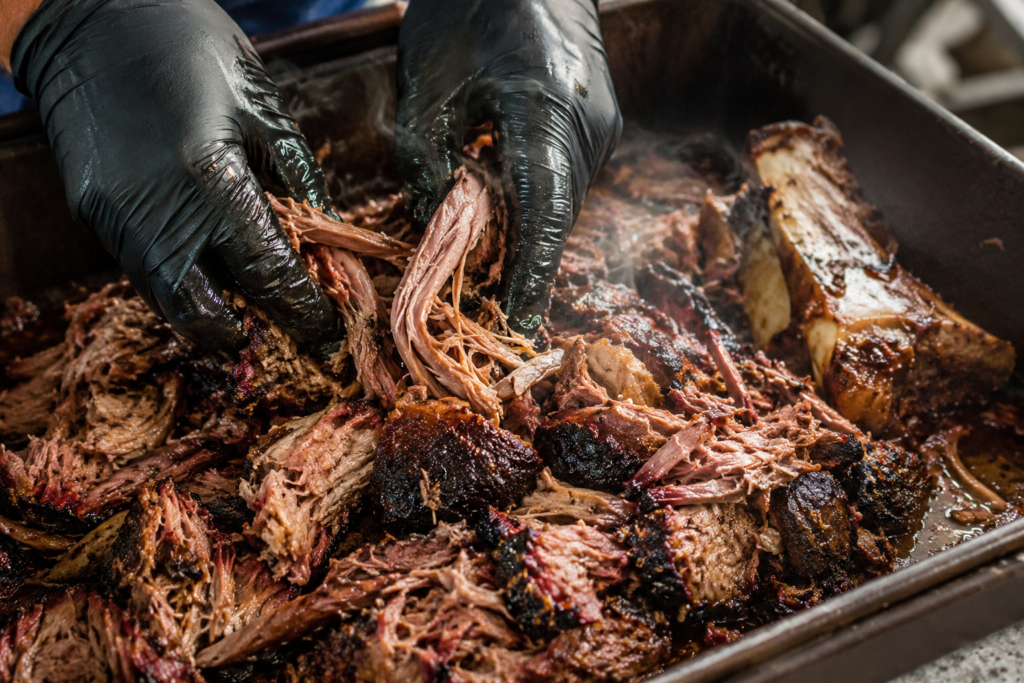
Open the foil carefully because hot steam and liquid may be trapped inside. Save the liquid instead of pouring it away.
The shoulder blade bone should pull out cleanly with very little resistance. Remove any large pieces of unrendered fat, then separate the pork into a mixture of tender strands, chunks, and bark pieces.
Do not shred everything into extremely fine fibers. Larger pieces stay moist longer and give the finished pulled pork better texture.
Let the saved liquid settle briefly and remove some of the fat from the top if desired. Add the remaining flavorful juices back to the pulled pork a little at a time.
Toss gently, taste the meat, and add a light dusting of the original rub if more seasoning is needed.
Serve smoked pulled pork butt on sandwiches, barbecue plates, tacos, nachos, baked potatoes, or pizza. Barbecue sauce can be served on the side so the smoke flavor and bark remain the focus.
How Long Does Smoked Pulled Pork Butt Take?
At 250°F, an 8- to 10-pound pork butt often takes approximately 10 to 14 hours.
At 225°F, the same cut may take 12 to 18 hours or longer.
These times are estimates, not promises. Pork butts of the same weight can finish hours apart because thickness, marbling, temperature stability, weather, and wrapping all affect cooking time.
Plan backward from serving time and include a generous resting window. It is much easier to keep a finished pork butt hot for several hours than to make hungry guests wait for a stubborn piece of meat to become tender.
For an event, I would rather have the pork finish three hours early than thirty minutes late.
👉 Here’s my Article on The BBQ Stall Explained.
Common Smoked Pulled Pork Mistakes
Cooking Strictly by Time
Time estimates help with planning, but the pork is finished when it is probe tender.
👉 Here’s the USDA Temperature Chart
Wrapping Before the Bark Is Set
Wrapping too early can create a soft, pale exterior. Wait until the seasoning has formed a dark crust that does not easily wipe away.
Using Too Much Smoke
More smoke is not always better. Thick, dirty smoke can overpower the meat and create a bitter aftertaste.
Opening the Smoker Too Often
Trust your thermometer. Repeatedly opening the lid releases heat and makes an already long cook take even longer.
Skipping the Rest
Pulling the pork immediately allows heat and moisture to escape quickly. Rest the pork whole and wrapped before shredding it.
Throwing Away the Juices
The liquid inside the foil contains pork flavor, seasoning, and rendered fat. Save it, remove excess fat if desired, and mix a controlled amount back into the meat.
Frequently Asked Questions
What is the best temperature for smoked pulled pork butt?
A smoker temperature of 250°F provides a good balance of smoke exposure, bark development, and cooking time. Cooking at 225°F also works, but the cook will normally take longer.
When should I wrap pork butt?
Wrap the pork when the bark is dark and firmly set, usually around 160°F to 170°F internal temperature. Check the bark instead of wrapping only because the thermometer reaches a certain number.
What internal temperature is pulled pork done?
Most pork butt becomes tender between 200°F and 205°F. The best test is probe tenderness in several locations.
Should the pork butt fat cap face up or down?
Turn the fat cap toward the primary heat source. On many pellet smokers, that means fat-side down. In an offset smoker, face the fat cap toward the firebox.
How much pulled pork should I make per person?
Plan on approximately 1/3 to 1/2 pound of cooked pulled pork per adult. The exact amount depends on the number of side dishes and whether the pork is served as sandwiches or as the main portion of a barbecue plate.
Can I smoke pork butt the day before?
Yes. Cook and rest the pork, save the juices, and refrigerate it promptly. Reheat it covered with some of the reserved juices until hot.
For the freshest bark and texture, cooking and holding the pork on the same day is preferred.
Looking for more Pork Butt Recipes and Techniques: 👇🏻
Internal Temp for Pulled Pork: The Perfect Temperature for Tender, Juicy BBQ
The Complete Guide to Perfect Smoked Pulled Pork (Juicy, Tender, Every Time)
How Long to Rest Pork Butt Before Pulling
The Perfect Pork Butt at 225°F (Complete Guide)
Final Thoughts
This smoked pulled pork butt recipe is built around a simple formula: season generously, maintain steady heat, use clean smoke, wrap after the bark is set, cook until probe tender, and rest before pulling.
Do not let the long cooking time make the recipe feel complicated. Pork butt is forgiving, and the process becomes predictable once you stop cooking by the clock.
Focus on the bark, tenderness, and proper rest, and you will produce juicy smoked pulled pork butt with rich smoke flavor and the kind of texture that makes it one of backyard barbecue’s most reliable crowd-pleasers.
🔥 Shop BSL Favorites on Amazon!
📄 Get Free BBQ Recipes, Guides & Charts
👉Check out the list of BBQ Gear I recommend and use
🔥 Follow Backyard Smoke Lab for more BBQ tips, recipes, and reviews
📺 YouTube: https://www.youtube.com/@backyardsmokelab
📸 Instagram: https://www.instagram.com/backyardsmokelab
🎵 TikTok: https://www.tiktok.com/@backyardsmoklab
🌐 Website: https://backyardsmokelab.com