
How long to rest pork butt before pulling is one of the most overlooked steps in making tender, juicy pulled pork. After spending 8–12 hours on the smoker, giving the pork butt time to rest allows the juices to redistribute, making the meat easier to shred and noticeably more flavorful.
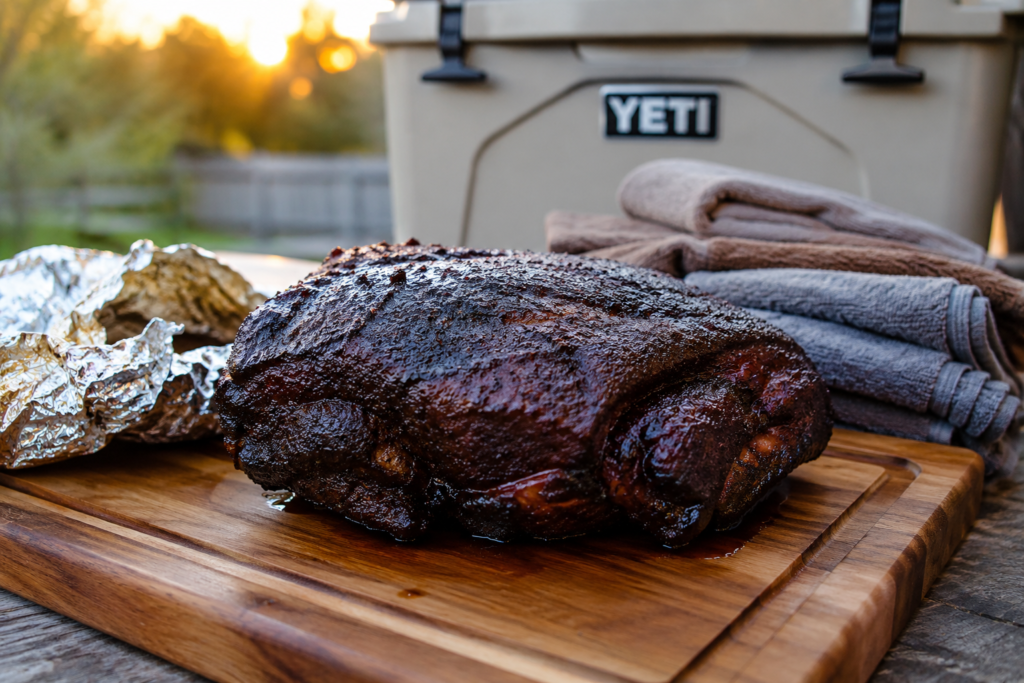
So, how long should you rest pork butt before pulling?
For the best balance of tenderness and convenience, rest a pork butt for about one hour before pulling it. A minimum rest of 30 minutes will work, while a tightly wrapped pork butt can often be held for one to six hours in an insulated cooler. The longer rest can produce excellent results, provided the meat stays safely above 140°F.
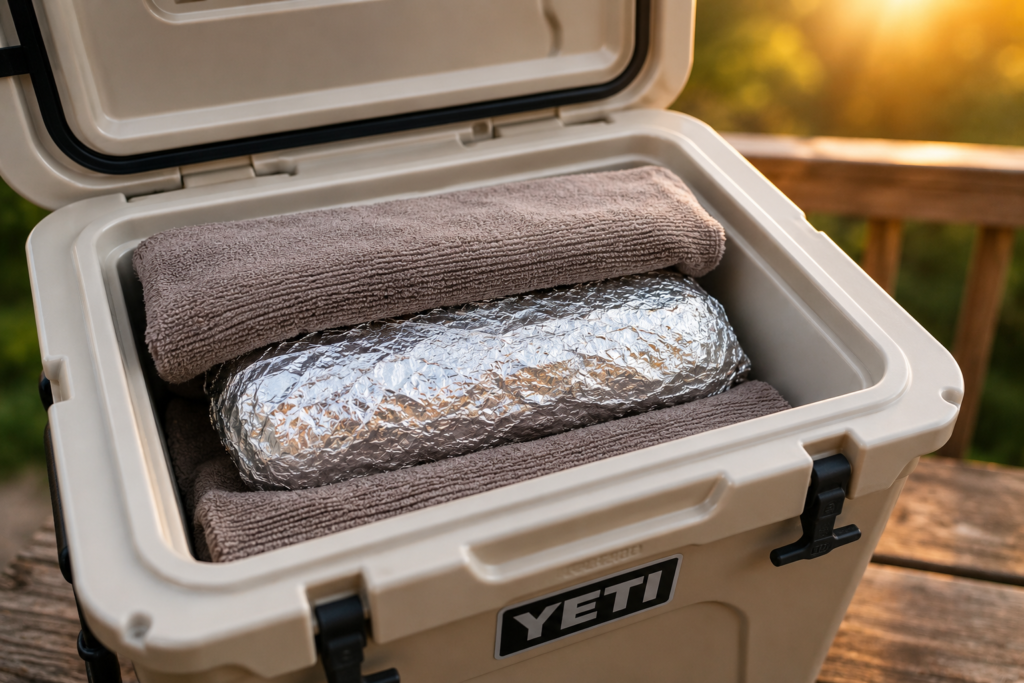
At Backyard Smoke Lab, my preferred method is simple: keep the finished pork butt wrapped in foil, place it inside a cooler, and cover it completely from top to bottom with clean bath towels. This holds the heat, protects the juices, and gives the meat time to relax before shredding.
Why You Should Rest Pork Butt Before Pulling
Resting is not just dead time between smoking and eating. It is the final stage of the cook.
When pork butt comes off the smoker, the meat is extremely hot and the juices inside are still moving. Pulling it immediately allows much of that liquid to spill onto the cutting board instead of remaining in the pork.
How long to rest pork butt before pulling? A proper rest allows the temperature to settle and gives the juices time to redistribute through the meat. The pork becomes easier to handle, the connective tissue remains soft, and the finished pulled pork tends to stay moist longer after shredding.
Resting also gives you scheduling flexibility. Pork butt does not always finish exactly when expected. A cooler hold allows you to finish the cook early and serve the pork when your guests are ready. So when planning a cook around an event with large cuts of meat, I plan to be off smoker 3 hours or more. Cook times vary early or late depending on equipment temperature, outdoor temperature and size of meat on the smoker.
How Long to Rest Pork Butt Before Pulling
Here is a practical guide based on the length of the rest:
30 Minutes: The Minimum Rest
Thirty minutes is the shortest rest I recommend for a smoked pork butt.
This is enough time for the surface temperature to drop slightly and for some of the juices to settle. Leave the pork wrapped and place it in a draft-free area or an unheated cooler.
A 30-minute rest is useful when dinner is already running late, but it is not my preferred target.
One Hour: The Optimal Resting Time
How long to rest pork butt before pulling? For most backyard cooks, one hour is the ideal pork butt resting time.
The meat stays plenty hot, the bark remains in good condition, and the pork has time to settle before pulling. One hour also fits easily into most BBQ schedules without requiring a long holding process.
Keep the pork butt tightly wrapped in foil. Place it in a clean cooler and surround it with bath towels to reduce heat loss.
Two to Four Hours: An Excellent Extended Hold
How long to rest pork butt before pulling? A two- to four-hour rest can make serving time much easier, especially when cooking for a party.
A large pork butt has enough thermal mass to hold heat surprisingly well when wrapped and insulated. The meat may become even easier to pull after the extended rest.
For a longer hold, preheat the cooler by filling it with hot water for several minutes. Empty and dry the cooler before adding the wrapped pork. Cover the pork completely with towels and keep the lid closed.
Four to Six Hours: Possible With Temperature Monitoring
How long to rest pork butt before pulling? I have rested pork butt for as long as six hours with excellent results. However, a long rest requires more attention to temperature.
Use a leave-in thermometer or periodically check the internal temperature with an instant-read thermometer. Hot food should be kept at or above 140°F. If the pork approaches 140°F before you are ready to serve, move it to a low oven or warming oven set around 150°F to 170°F.
👉 Here’s a great wireless thermometer
Do not assume the cooler will hold a safe temperature for six hours every time. Cooler quality, pork size, outdoor temperature, starting temperature, and the number of towels can all affect the hold.
From the Smoker to the Shred: Step-by-Step
The resting process begins the moment the pork butt finishes cooking.
1. Confirm the Pork Butt Is Done
Do not remove pork butt from the smoker based only on a specific internal temperature.
Most pork shoulders become tender somewhere around 198°F to 205°F, but the final test should be feel. Insert a temperature probe into several areas of the meat. It should slide in with very little resistance, similar to pushing it into softened butter.
Check around the blade bone and in the thickest section of the pork. If the probe still meets resistance, continue cooking and check again.
2. Save the Juices
If the pork butt is wrapped in foil, carefully remove it from the smoker without puncturing the bottom of the foil.
The liquid inside contains rendered fat, pork juices, seasoning, and smoke flavor. Save it. You can separate some of the excess fat later and mix the flavorful juices back into the pulled pork.
Place the wrapped pork inside a rimmed pan before moving it. This catches any leaks and makes handling much safer.
3. Vent Briefly When Necessary
If the pork butt is extremely hot or the bark has softened inside the foil, open the top of the foil for about five to ten minutes before the cooler hold.
This allows some steam to escape and slows the carryover cooking. Do not leave it open for an extended period. Once the initial burst of steam has escaped, close the foil tightly.
When the bark already looks exactly the way you want it, you can skip the vent or keep it very short.
4. Wrap the Pork Butt Tightly
For my preferred resting method, foil works better than loose butcher paper because it holds the juices and limits heat loss. 👉 Here’s the foil I use.
If the original foil is torn or leaking, add a second layer of heavy-duty aluminum foil. Keep the pork in a pan if you want extra protection against leaks.
The goal is to create a tight package that holds heat without allowing the juices to escape. Check out my article Wrap vs No Wrap BBQ?
5. Prepare the Cooler
Use a clean, dry cooler that is just large enough to hold the pork butt, pan, and towels.
For a rest longer than two hours, preheat the cooler with hot water. Let the hot water sit inside for five to ten minutes, then empty the cooler and dry it thoroughly.
Place a folded bath towel on the bottom. Set the wrapped pork butt on the towel, then cover the sides and top with additional towels. The pork should be insulated from top to bottom.
Close the lid and avoid opening the cooler. Every time the lid is opened, heat escapes.
6. Monitor the Holding Temperature
How long to rest pork butt before pulling? For a one-hour rest, a large pork butt placed into a properly insulated cooler will normally remain very hot.
For longer holds, temperature matters more than the clock. Keep the pork at or above 140°F during the hold. USDA food-safety guidance identifies 40°F to 140°F as the temperature range where bacteria can grow rapidly, and hot food should be maintained at 140°F or warmer.
A wired probe or wireless thermometer makes this easy. Insert the probe before sealing the foil and route the wire outside the cooler. Here’s where to put the Probe to monitor the Temp.
If the temperature gets close to 140°F, transfer the wrapped pork to a low oven rather than continuing the cooler rest.
7. Unwrap and Remove the Bone
When you are ready to serve, transfer the pork butt to a large pan or cutting board with a juice channel.
Open the foil carefully because hot steam and liquid may be trapped inside. Pour the collected juices into a heat-safe container.
Grip the shoulder blade bone and pull it from the meat. When the pork is properly cooked, the bone should slide out cleanly with little effort.
Check the meat around the bone and remove any large pieces of unrendered fat.
8. Pull the Pork
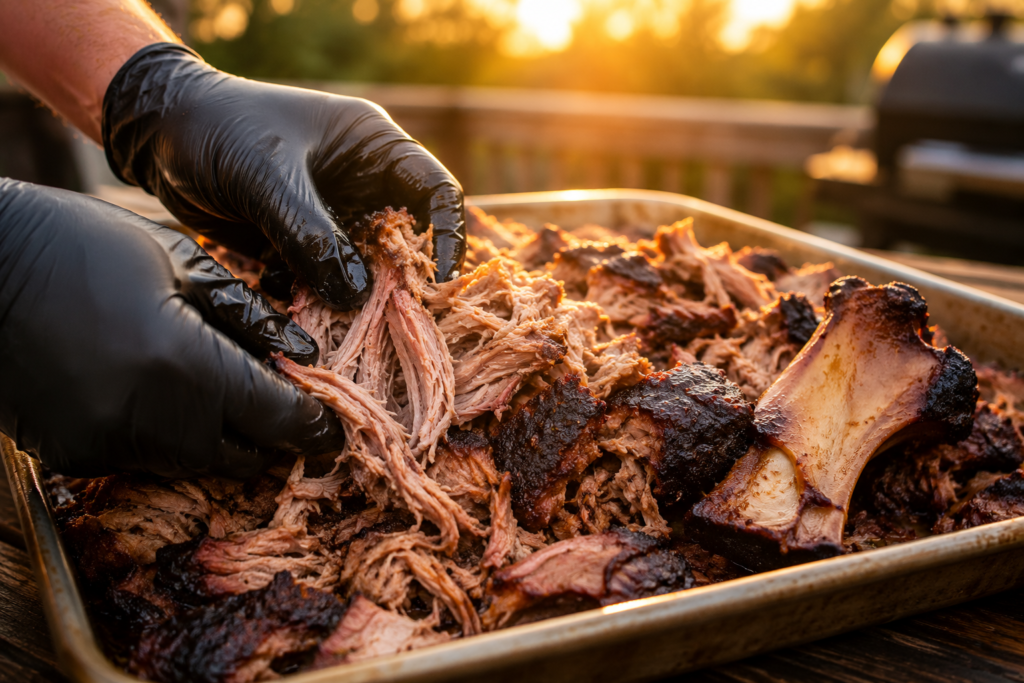
Use gloved hands, meat claws, or two large forks to separate the pork into bite-sized strands.
Do not shred it into extremely fine pieces. A mixture of larger bark pieces, tender chunks, and smaller strands gives pulled pork a better texture.
As you pull, remove any large pockets of fat that did not fully render.
9. Add the Juices Back
Allow the collected liquid to sit briefly. Some of the fat will rise to the top, making it easier to remove if desired.
Pour a small amount of the remaining juice over the pulled pork and mix gently. Add more only as needed. The goal is moist pork, not pork swimming in liquid.
Taste the meat before adding more seasoning. A light dusting of the original BBQ rub can wake up the flavor after pulling.
Should You Rest Pork Butt Wrapped or Unwrapped?
Pork butt should normally rest wrapped.
An unwrapped pork butt loses heat quickly and can dry around the edges. Foil provides the strongest heat retention and captures the cooking juices, making it the best choice for a cooler hold.
Butcher paper can help preserve a firmer bark, but it does not hold liquid or heat as efficiently as foil. For a short countertop rest, butcher paper can work. For a one- to six-hour insulated hold, I prefer foil.
Can You Rest Pork Butt Too Long?
Yes, especially if the temperature drops below the safe hot-holding range.
The pork can also become overly soft if it remains near finishing temperature for too long. This is more likely when the pork is placed directly into a heavily insulated cooler at 205°F without a brief vent.
For most cooks, one to four hours provides a wide and forgiving serving window. A six-hour hold can work, but monitor the internal temperature and use a low oven when necessary.
Can You Pull Pork Butt Before Resting?
You can, but the results are usually not as good.
Pulling immediately exposes much more surface area, allowing heat and moisture to escape quickly. The pork may look juicy at first but dry out faster while sitting in the serving pan.
Rest the pork butt whole, then pull it shortly before serving.
Final Answer
How long should you rest pork butt before pulling? Plan on approximately one hour for the best all-around results.
A 30-minute rest is the minimum I recommend. A two- to four-hour hold is excellent for scheduling, and a properly wrapped pork butt can sometimes rest for as long as six hours when its internal temperature is monitored.
My preferred method is to leave the pork butt tightly wrapped in foil, place it in a clean cooler, and surround it completely with bath towels. Once the rest is finished, remove the bone, pull the pork, mix in the reserved juices, and season to taste.
The smoker may do most of the cooking, but the rest is what helps turn a finished pork butt into tender, juicy pulled pork.
🔥 Shop BSL Favorites on Amazon!
📄 Get Free BBQ Recipes, Guides & Charts
👉Check out the list of BBQ Gear I recommend and use
🔥 Follow Backyard Smoke Lab for more BBQ tips, recipes, and reviews
📺 YouTube: https://www.youtube.com/@backyardsmokelab
📸 Instagram: https://www.instagram.com/backyardsmokelab
🎵 TikTok: https://www.tiktok.com/@backyardsmoklab
🌐 Website: https://backyardsmokelab.com