
There’s nothing worse than smoking a beautiful chicken, slicing into juicy, perfectly cooked meat, and discovering the skin has the texture of rubber.
If you’re wondering why smoked chicken skin is rubbery, the answer usually comes down to one thing: the skin never received enough dry heat to render its fat and become crisp. Smoking chicken at traditional low barbecue temperatures like 225°F can produce plenty of smoke flavor, but those temperatures aren’t always high enough to create bite-through, crispy skin.
The good news is that rubbery chicken skin is completely preventable.
The key is understanding how temperature, moisture, seasoning, airflow, and finishing technique affect chicken skin. Here’s exactly how to get crispy smoked chicken skin without sacrificing juicy meat or smoke flavor.
Why Smoked Chicken Skin Is Rubbery
Chicken skin contains fat, moisture, and connective tissue. During cooking, that fat needs to render while moisture evaporates from the surface.
When chicken spends several hours cooking at only 225°F to 250°F, the meat can become tender and smoky while the skin remains soft.
Instead of becoming crisp, the skin essentially steams.
This is especially common with:
- Whole smoked chickens
- Chicken thighs
- Chicken quarters
- Smoked wings
- Beer can chicken
- Spatchcock chicken
The solution isn’t necessarily cooking the chicken longer.
You need more heat and less surface moisture.
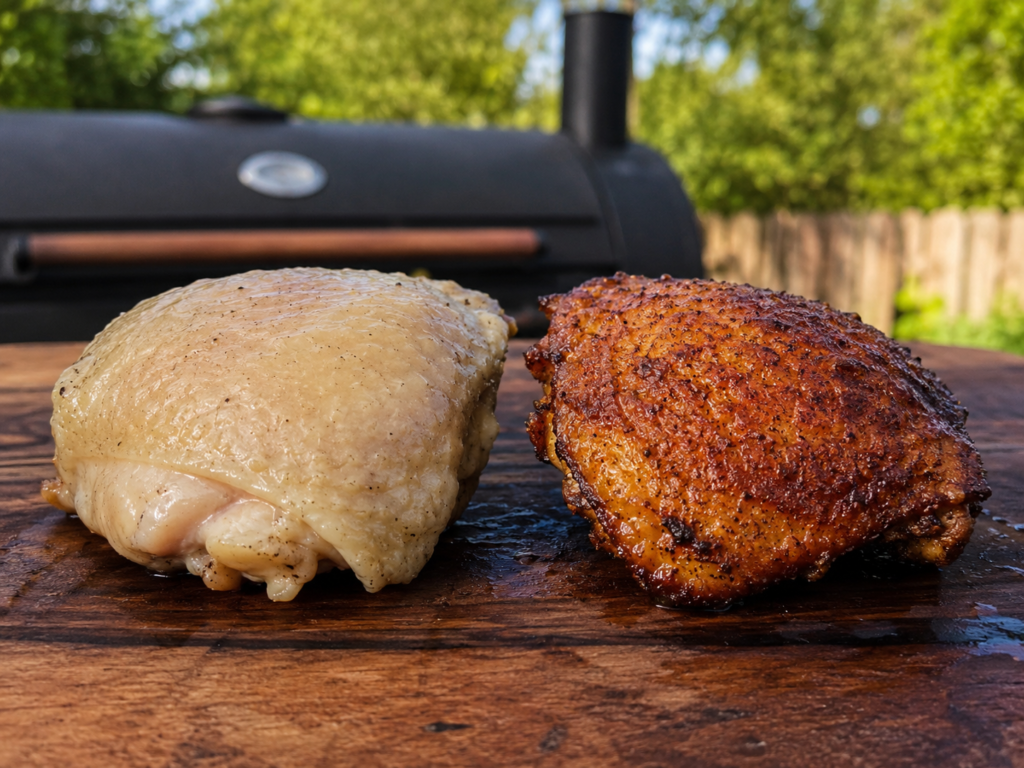
1. Smoke Chicken at a Higher Temperature
One of the easiest fixes is simply increasing your smoker temperature.
While brisket and pork butt benefit from long cooks around 225°F to 250°F, chicken usually does better at higher temperatures.
For most smoked chicken, I prefer cooking around:
300°F to 350°F
That temperature range is still low enough to give the chicken plenty of smoke exposure while producing enough heat to render fat beneath the skin.
Chicken doesn’t require hours of low-and-slow cooking to become tender.
In fact, cooking chicken too slowly can actually work against you if crispy skin is the goal.
Backyard Smoke Lab Tip
Don’t assume every meat belongs at 225°F.
Chicken often benefits from treating your smoker more like a wood-fired oven with smoke than a traditional low-temperature smoker.
2. Dry the Chicken Skin Before Smoking
Moisture is the enemy of crispy skin.
Most chicken coming directly from its packaging has significant moisture on the surface.
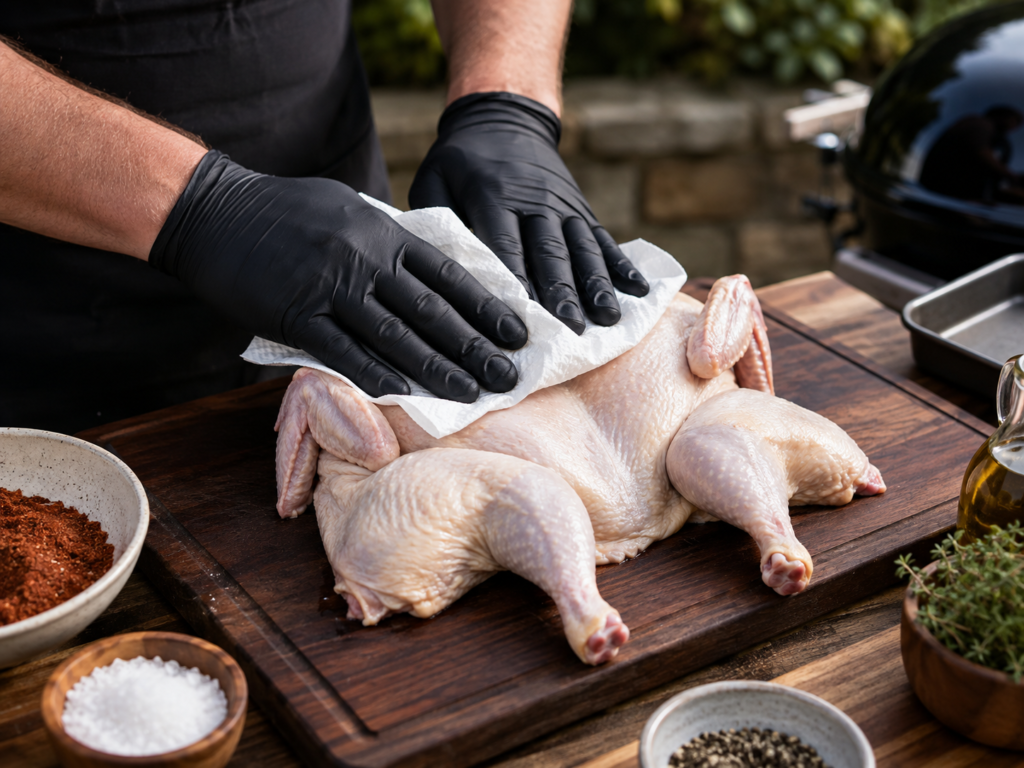
Before seasoning, remove the chicken from the package and thoroughly pat the skin dry using paper towels.
You can take this one step further by placing the uncovered chicken in the refrigerator for several hours or overnight.
The refrigerator’s dry circulating air helps remove moisture from the skin.
This gives you a much better starting point when the chicken hits the smoker.
3. Try a Dry Brine
Another excellent technique for creating crispy smoked chicken skin is dry brining.
Season the chicken with kosher salt and refrigerate it uncovered for several hours or overnight.
The salt initially draws moisture toward the surface. Over time, that moisture is reabsorbed while the refrigerator continues drying the exterior.
The result is seasoned meat with noticeably drier skin.
You can then apply your favorite barbecue seasoning immediately before cooking.
Just remember that if your BBQ rub already contains a significant amount of salt, reduce the amount used during the dry brine.
4. Don’t Use Too Much Binder
Mustard, oil, hot sauce, and other binders can help barbecue seasoning stick to meat.
But chicken skin doesn’t need a heavy coating.
A thick layer of binder adds additional surface moisture and can slow down crisping.
If your seasoning already sticks to the chicken, skip the binder completely.
If you do use one, apply only a very thin coating.
The goal is to season the chicken — not coat the skin in liquid.
5. Don’t Constantly Spritz Smoked Chicken
Spritzing brisket or pork with apple juice, vinegar, or water is common in barbecue.
Chicken is different.
Every time you spray the skin, you’re putting moisture back onto a surface you’re trying to dry.
That can significantly contribute to rubbery smoked chicken skin.
For crispy chicken, I usually leave the smoker closed and let the heat do the work.
You’ll also maintain a more stable cooking temperature by avoiding unnecessary lid openings.
6. Use Good Airflow
Good smoker airflow helps remove moisture from the cooking chamber.
A smoker filled with stagnant, humid air makes crispy skin harder to achieve.
Make sure your exhaust vent isn’t excessively restricted.
A clean-burning fire should produce light, clean smoke with consistent airflow through the cooker.
Good airflow does two things:
- Produces better smoke flavor.
- Helps dry the surface of the chicken.
That’s exactly what you want when trying to create bite-through skin.
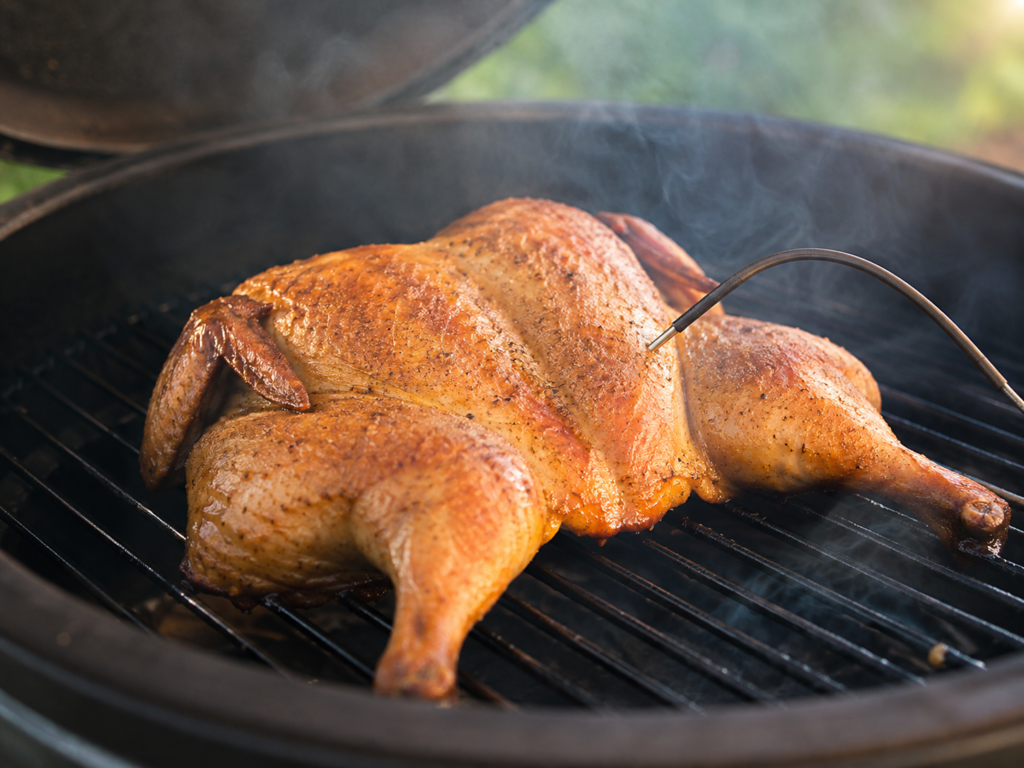
7. Finish the Chicken With High Heat
What if you’ve already smoked your chicken at 225°F?
You can still save the skin.
When the chicken is approaching its finished internal temperature, increase the cooker temperature to approximately 375°F to 425°F.
Give the chicken several minutes of higher heat while watching it closely.
You can also transfer it to:
- A hot grill
- Gas grill
- Charcoal grill
- Hot oven
The goal isn’t to dramatically increase the internal temperature.
You’re using high heat to finish rendering the skin and evaporate surface moisture.
Be particularly careful with barbecue sauce because sauces containing sugar can burn quickly at higher temperatures.
8. Add Barbecue Sauce Near the End
Speaking of sauce, timing matters.
Putting barbecue sauce on chicken early in the cook can create another wet layer on the surface.
Instead, allow the chicken skin to develop first.
During approximately the final 10 to 15 minutes of cooking, brush on a thin layer of sauce and allow it to set.
This gives you sticky, glazed chicken without completely sacrificing the texture of the skin.
For truly crispy skin, serve sauce on the side.
What Temperature Should You Smoke Chicken At?
For most smoked chicken recipes, 300°F to 350°F is the sweet spot.
You’ll still get excellent wood-fired flavor, but the additional heat dramatically improves your chances of getting crispy skin.
Always cook chicken according to internal temperature rather than time alone.
Chicken breast should reach a safe finished temperature of 165°F in the thickest portion.
Dark meat such as thighs and legs can usually be taken higher — often around 175°F to 185°F — and remain juicy while becoming more tender.
A reliable meat thermometer makes this much easier. 👉 Check out our Thermometer Buyers Guide.
For proper placement, insert the probe into the thickest portion of the meat without allowing the probe tip to touch bone. 👉Here’s our Probe Placement Article
Can Baking Powder Make Chicken Skin Crispy?
Yes.
A small amount of aluminum-free baking powder mixed into your dry seasoning can help create crispier chicken skin.
Baking powder changes the surface conditions of the skin and encourages browning and crisping.
You don’t need much.
Try approximately 1 teaspoon of baking powder per pound of chicken, mixed thoroughly with your seasoning.
Do not substitute baking soda.
Too much baking powder can also create an unpleasant flavor, so more isn’t better.
This technique works especially well for smoked wings and chicken thighs.
The Best Method for Crispy Smoked Chicken Skin
If crispy skin is your priority, this is the method I recommend:
Start by thoroughly drying the chicken. For even better results, dry brine it uncovered in the refrigerator overnight.
Preheat your smoker to approximately 325°F.
Apply your seasoning without a heavy binder and place the chicken directly onto the smoker grate.
Maintain good airflow and resist the urge to repeatedly spritz the chicken.
Cook until you’re approaching your target internal temperature.
If the skin still isn’t as crisp as you’d like, increase the smoker temperature to around 400°F for the final few minutes.
Frequently Asked Questions
Why is my chicken skin tough after smoking?
Chicken skin usually becomes tough because it was cooked too long at a low temperature or because too much moisture remained on the surface. Increase the smoker temperature and make sure the chicken skin is thoroughly dry before cooking.
Is 225°F too low for smoked chicken?
You can smoke chicken at 225°F, but it isn’t ideal for crispy skin. Temperatures around 300°F to 350°F generally produce better chicken skin while still providing plenty of smoke flavor.
Should I put oil on chicken skin before smoking?
You can use a very light coating of oil, but it isn’t necessary. Avoid heavily coating the chicken because excess surface moisture can interfere with crisping. Other BBQ guys spray with cooking oil or duck fat.. I’ve never had luck with this technique.
How do restaurants get chicken skin crispy?
High heat and dry skin are the biggest factors. Restaurants frequently cook poultry at significantly higher temperatures than traditional low-and-slow barbecue. Internal Temps for Chicken is important too.. Here’s a temperature guide for all meats.
Any other BSL Chicken Articles?
Here You Go:
- Smoked Beer Can Chicken: The Complete Guide to Juicy BBQ Chicken
- Smoked Chicken Thighs Temperature Guide (Perfect Every Time)
- Gameday Chicken Wings
Why Smoked Chicken Skin Is Rubbery: Final Thoughts
If you’ve been wondering why smoked chicken skin is rubbery, don’t blame your smoker.
The problem is usually the cooking method.
Chicken needs a different approach than brisket or pork shoulder.
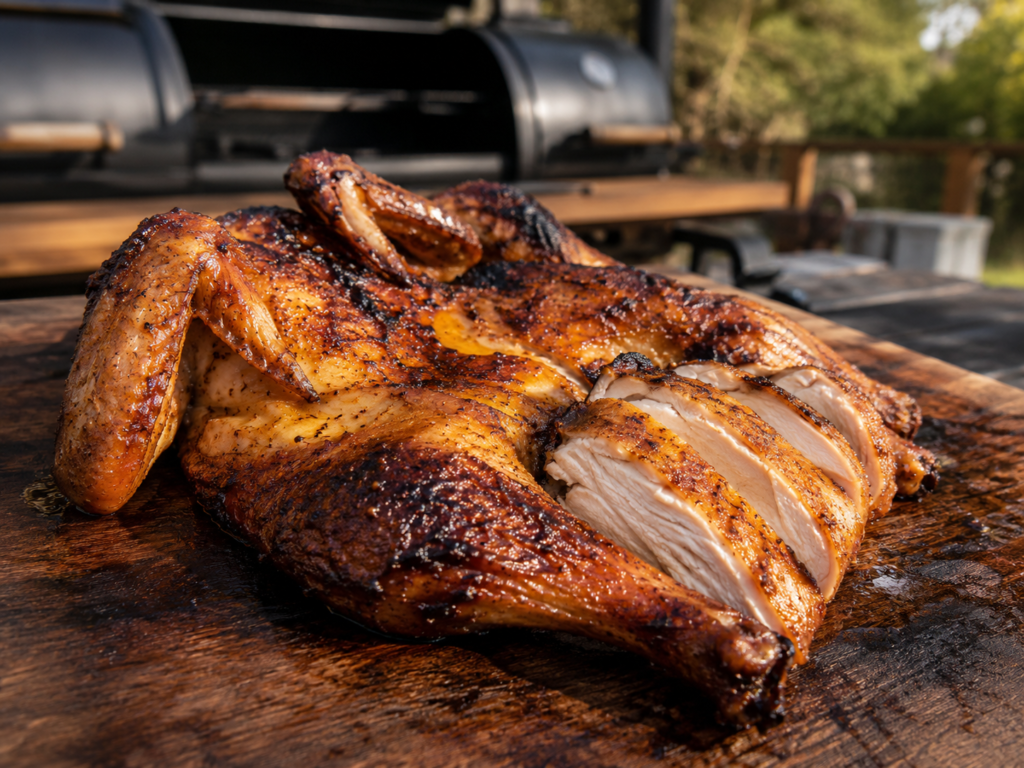
Start with dry chicken skin, smoke around 300°F to 350°F, maintain good airflow, avoid unnecessary spritzing, and use higher heat at the end if the skin needs additional crisping.
Once you stop automatically smoking chicken at 225°F, you’ll probably notice an immediate difference.
You’ll still get juicy meat and plenty of smoky barbecue flavor — but now you’ll get the golden, bite-through skin that smoked chicken deserves.
Real BBQ. Real Results.
🔥 Shop BSL Favorites on Amazon!
📄 Get Free BBQ Recipes, Guides & Charts
👉Check out the list of BBQ Gear I recommend and use
🔥 Follow Backyard Smoke Lab for more BBQ tips, recipes, and reviews
📺 YouTube: https://www.youtube.com/@backyardsmokelab
📸 Instagram: https://www.instagram.com/backyardsmokelab
🎵 TikTok: https://www.tiktok.com/@backyardsmoklab
🌐 Website: https://backyardsmokelab.com