
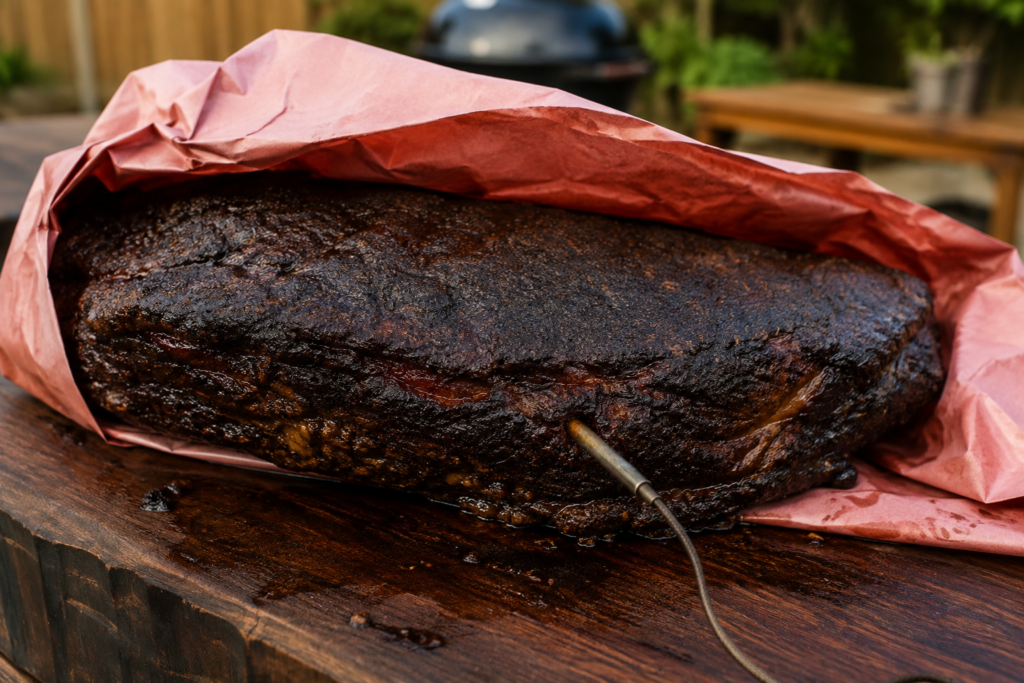
After spending hours trimming, seasoning, smoking, and monitoring the meat, you may wonder how long to rest a brisket before slicing it. Resting is one of the most important final steps in producing tender, juicy slices.
A smoked brisket should rest for at least 30 minutes, but one to two hours is better for most cooks. A large whole packer brisket can usually be held for two to four hours in a preheated cooler or low-temperature oven. The goal is to let the meat settle while keeping it hot enough to serve safely.
Resting is the final stage of the cook and one of the easiest ways to improve the tenderness, moisture, and slicing quality of your brisket.
Quick Answer: How Long to Rest a Brisket
Use these brisket resting times as a practical guide:
- Absolute minimum: 30 minutes
- Better for most briskets: 1 to 2 hours
- Large whole packer brisket: 2 to 4 hours
- Extended hot hold: Up to 4 to 6 hours when the brisket remains above 140°F
When deciding how long to rest a brisket, consider both the size of the meat and how long it must remain warm before serving.
Here’s a great wireless probe.
A small brisket flat may only need 30 to 60 minutes. A large packer brisket benefits from a longer rest because it holds more heat and takes longer for the internal temperature to settle.
The best plan is to finish your brisket early. It is much easier to hold a completed brisket than to rush one that is not yet tender when your guests are ready to eat.
Here’s the USDA site Safe Temperature Chart. And our printable Probe Placement Chart.
Why Does Brisket Need to Rest?
Understanding how long to rest a brisket helps prevent you from cutting into it while the internal temperature is still extremely high.
Brisket is a large, dense cut containing tough muscle fibers, connective tissue, rendered fat, and moisture. When it comes off the smoker, the outside portions are hotter than the center.
Resting gives the internal temperature time to become more even and allows carryover cooking to slow before you begin slicing. Cutting immediately can send hot liquid across the cutting board and leave the flat drier than necessary.
A properly rested brisket generally slices more cleanly, holds together better, and loses less moisture during carving.
Resting cannot rescue an undercooked brisket. The meat should already be probe-tender before it leaves the smoker. A finishing temperature around 200°F to 205°F is common, but tenderness matters more than reaching one exact number.
Resting Versus Holding a Brisket
Resting and holding are related, but they are not exactly the same.
Resting is the initial period after the brisket leaves the smoker. The temperature begins to fall and carryover cooking slows.
Holding means keeping the rested brisket warm until serving. A cooler or low oven can extend the time between finishing and slicing.
For most backyard cooks, the simplest approach is a short vent followed by a warm hold.
The Best Way to Rest a Brisket
1. Confirm That the Brisket Is Tender
Insert an instant-read thermometer or temperature probe into several areas of the flat and point. It should slide into the meat with very little resistance.
The flat is usually the section that determines doneness because it is leaner and less forgiving than the point. Do not remove the brisket based only on cooking time or temperature.
2. Let Excess Heat Escape
Place the wrapped brisket on the counter and slightly open the butcher paper or foil for approximately 10 to 20 minutes.
You do not need to fully unwrap it. This brief vent allows some excess heat and steam to escape before the brisket enters an insulated environment.
If the brisket finished extremely soft or above 205°F, use the longer end of the venting period. If it finished closer to 200°F and still feels firm enough to slice, keep the vent brief.
3. Close the Wrap
Close the butcher paper or foil around the brisket. Add a fresh outer layer if the original wrap is soaked or torn.
Butcher paper protects the bark better because it allows some steam to escape. Foil holds heat and moisture more aggressively but can soften the bark.
4. Rest or Hold Until Serving
Choose the resting method that fits your schedule:
- Counter: 30 to 60 minutes
- Insulated cooler: 1 to 4 hours
- Low oven: 2 to 6 hours
Keep a leave-in temperature probe in the thickest portion of the flat whenever possible.
Here’s our Printable Probe Placement guide and article.
How to Rest a Brisket in a Cooler
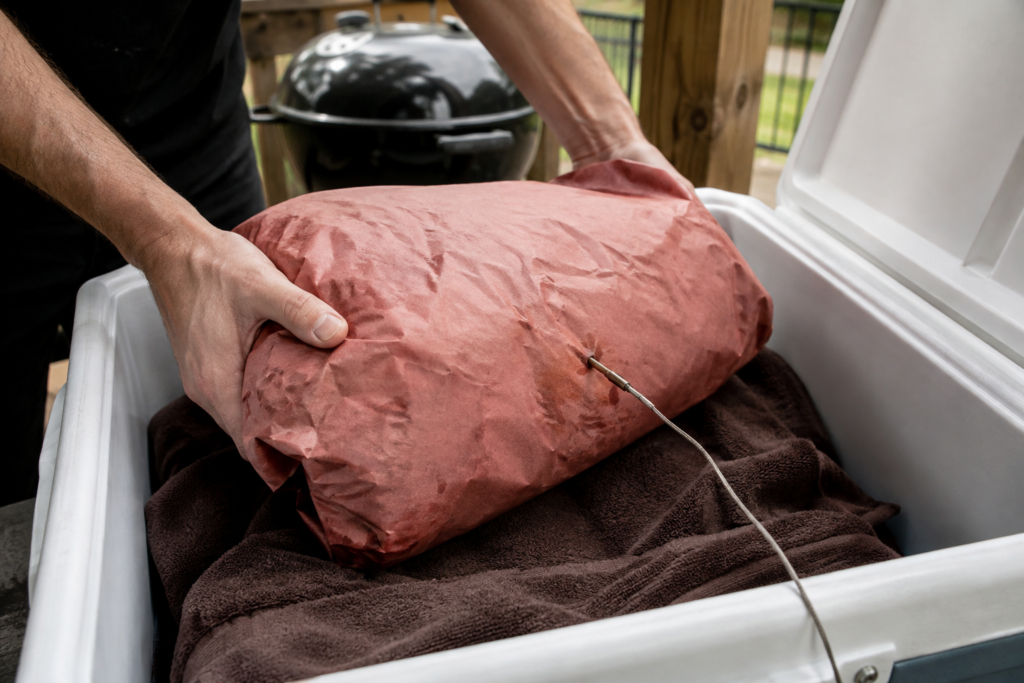
For cooks wondering how long to rest a brisket in a cooler, one to four hours is a practical range when the internal temperature is monitored.A dry insulated cooler works like a temporary warming cabinet and is one of the easiest ways to hold a brisket.
Preheat the cooler by filling it with hot tap water for 10 to 15 minutes or or use towels from a hot dryer. Empty the water and dry the cooler completely before adding the brisket.
Place the wrapped brisket inside and fill the unused space with clean towels. The towels reduce the amount of open air inside the cooler and help retain heat.
Close the lid and leave the cooler closed until you need to check the temperature or remove the brisket. Opening it repeatedly releases the heat you are trying to preserve.
A large brisket may remain hot for several hours, but cooler performance varies. Use a temperature probe rather than assuming the meat is still warm enough.
One practical warning: do not use your best towels. Smoke, grease, and rendered fat can work through the brisket wrap.
How to Hold a Brisket in the Oven
A low oven is the most predictable option for a long hold because it actively maintains heat.
Set your oven between 150°F and 170°F, depending on how low it can reliably operate. Place the wrapped brisket on a rimmed sheet pan to catch any leaks, and keep a temperature probe in the meat.
The brisket should remain above 140°F while it is being held. Home ovens can cycle above and below their displayed temperature, so verify the actual temperature rather than trusting the control panel alone.
Holding too hot for too long can soften the bark and push the flat toward a pot-roast texture. Use the lowest reliable oven setting that keeps the brisket safely hot.
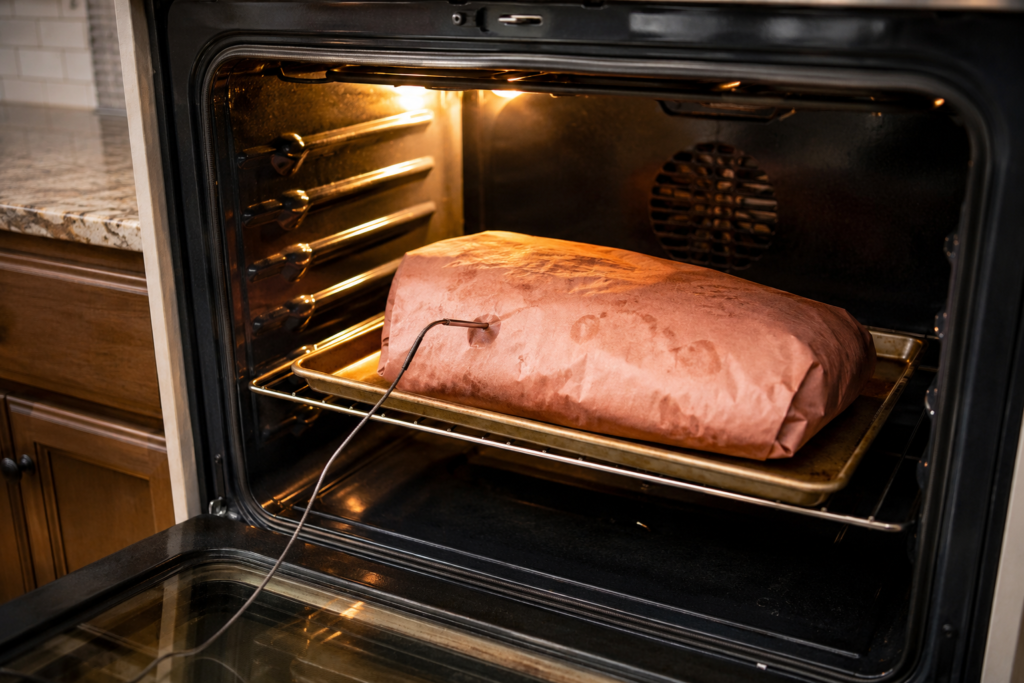
The answer to how long to rest a brisket in the oven depends on the holding temperature, but two to six hours is usually manageable at a reliable low setting.
Can You Rest Brisket on the Counter?
Yes, especially when you plan to eat within the next hour.
Leave the brisket wrapped and place it on a cutting board or rimmed sheet pan for 30 to 60 minutes. A smaller brisket flat may be ready after approximately 30 minutes, while a whole packer usually benefits from closer to an hour.
Do not leave cooked brisket sitting at room temperature for several hours. Use a cooler or heated holding method when serving is delayed.
What Temperature Should Brisket Be When Sliced?
Brisket is often easier to slice after it cools from its finishing temperature into approximately the 140°F to 160°F range.
When brisket is sliced extremely hot, the meat can crumble and release more liquid onto the cutting board. As it cools slightly, its structure firms enough to produce cleaner slices while remaining hot and juicy.
Treat temperature as a window rather than an exact target. When the brisket is safely hot and the flat slices cleanly without falling apart, it is ready to serve.
Should You Rest Brisket Wrapped or Unwrapped?
For most backyard cooks, brisket should remain wrapped during most of the rest.
Resting it completely unwrapped releases heat quickly and can dry the surface. Resting it tightly wrapped traps heat and steam, protecting moisture but potentially softening the bark.
A good compromise is to open the wrap briefly after cooking, let excess heat escape, and then close it for the remainder of the rest.
If the bark has softened, open the wrap shortly before serving. A few minutes of exposure to dry air may help the surface firm back up.
Common Brisket Resting Mistakes
Slicing the Brisket Immediately
Even when everyone is hungry, give the brisket at least 30 minutes. Slicing directly off the smoker is one of the easiest ways to lose moisture and produce ragged slices.
Putting a Very Hot Brisket Directly Into a Cooler
A tightly wrapped brisket can continue cooking inside a warm cooler. Venting it briefly helps control carryover heat.
Letting the Temperature Fall Too Low
A cooler is insulated, but it is not an active heat source. Monitor the internal temperature during a long hold.
Holding the Brisket Too Hot
A 180°F to 200°F oven continues cooking the brisket and may eventually dry out the flat.
Resting an Undercooked Brisket
If the probe still meets resistance, the brisket needs more cooking time. Resting does not replace proper collagen breakdown.
Slicing With the Grain
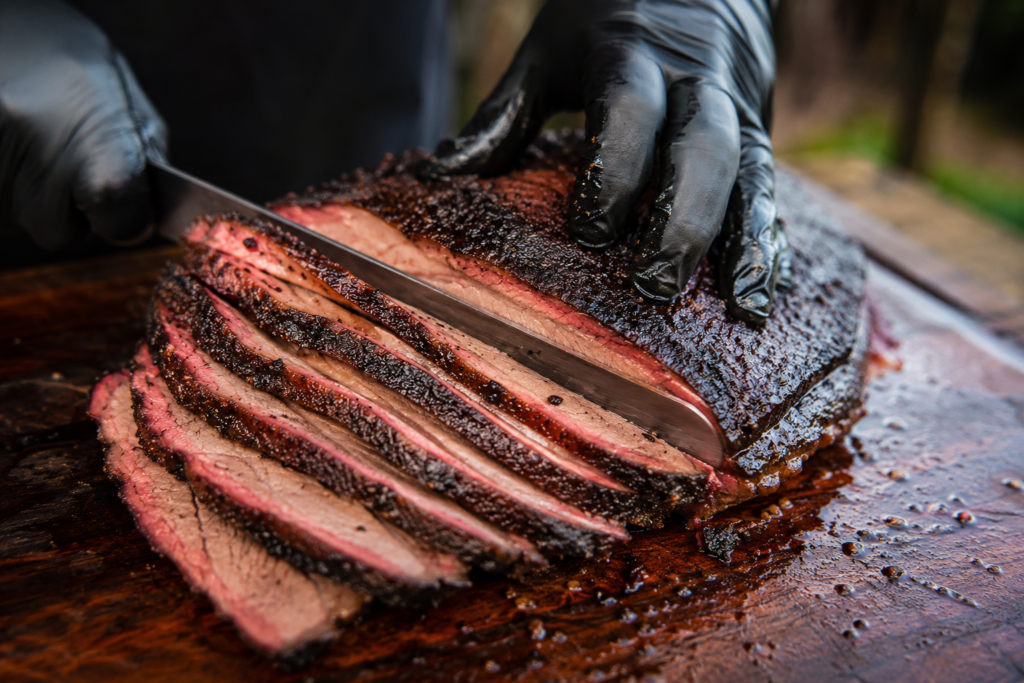
Even a perfectly rested brisket can seem tough when sliced incorrectly. The grain changes direction between the flat and point, so examine the meat carefully and slice across the grain.
Frequently Asked Questions
Is 30 Minutes Long Enough to Rest a Brisket?
Thirty minutes is the minimum resting time I recommend. It can work for a small brisket flat or when time is short, but a whole packer usually improves with a one- to two-hour rest.
Can I Rest a Brisket for Four Hours?
Yes. A wrapped brisket can often be held for four hours in a properly preheated cooler or low oven. Monitor the internal temperature and keep it above 140°F.
Can You Rest Brisket Overnight?
Not at room temperature or in an unmonitored cooler.
An overnight hold requires a reliable warming appliance that keeps the brisket safely above 140°F. Otherwise, cool and refrigerate the brisket promptly and reheat it safely the following day.
Does Brisket Continue Cooking While Resting?
Yes. Heat stored in the outside portions continues moving toward the cooler center after the brisket leaves the smoker.
This carryover cooking is why a brief vent can help before placing a very hot brisket into a cooler.
Will a Longer Rest Make Brisket More Tender?
A warm hold can improve the final texture, but it cannot completely fix a brisket that was removed before the connective tissue softened.
Always cook the brisket until it is probe-tender before beginning the rest.
Can I Use the Same Resting Method for Pork Butt?
Yes. The cooler and low-oven methods are similar to the techniques used to rest a pork butt.
The primary difference is the desired texture. Brisket must remain firm enough to slice, while pork butt is normally pulled and can tolerate a softer finish.
Final Answer: How Long to Rest a Brisket
Ultimately, how long to rest a brisket depends on its size, finishing temperature, and serving schedule but one to two hours is the best target for most cooks. Rest it for at least 30 minutes, and use a cooler or low oven when you need to hold it longer.
For the best result, cook the brisket until probe-tender, vent it briefly, close the wrap, and monitor its internal temperature during the hold. Slice only when the meat has settled, remains safely hot, and cuts cleanly against the grain.
Finish early, hold the brisket properly, and treat resting as part of the cook rather than an optional final step.
🔥 Shop BSL Favorites on Amazon!
📄 Get Free BBQ Recipes, Guides & Charts
👉Check out the list of BBQ Gear I recommend and use
🔥 Follow Backyard Smoke Lab for more BBQ tips, recipes, and reviews
📺 YouTube: https://www.youtube.com/@backyardsmokelab
📸 Instagram: https://www.instagram.com/backyardsmokelab
🎵 TikTok: https://www.tiktok.com/@backyardsmoklab
🌐 Website: https://backyardsmokelab.com