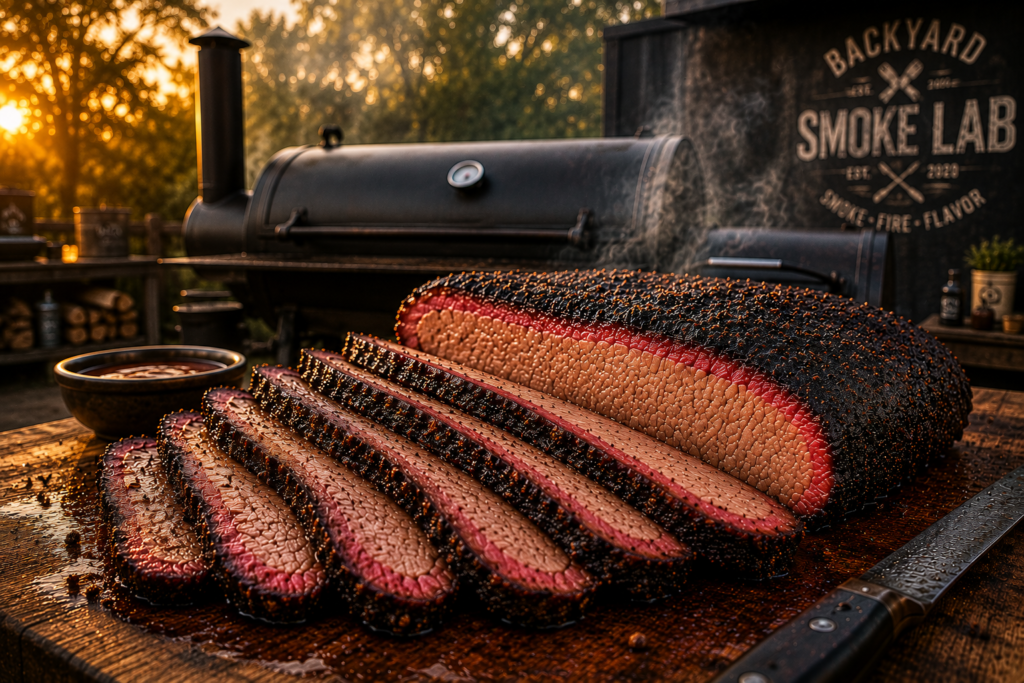
A smoke ring is the pink layer just beneath the bark on smoked brisket, pork shoulder, ribs, and other barbecue meats. If you’ve ever sliced into a perfectly smoked brisket or pork shoulder and noticed a beautiful pink layer just beneath the bark, you’ve seen a smoke ring. The smoke ring is one of the most recognizable signs of traditional barbecue. Many backyard pitmasters believe it’s the ultimate sign of authentic barbecue.
But here’s something that surprises many beginners:
The smoke ring has almost nothing to do with smoke flavor.
The smoke ring looks impressive, but it does not automatically mean better flavor. Instead, it’s a fascinating chemical reaction that occurs during the early stages of cooking. Understanding how it forms will help you improve your barbecue—and stop chasing myths that simply aren’t true.
In this guide, we’ll explain exactly what a smoke ring is, how it forms, why some meats develop better smoke rings than others, and the best techniques for producing one consistently.
What Is a Smoke Ring?
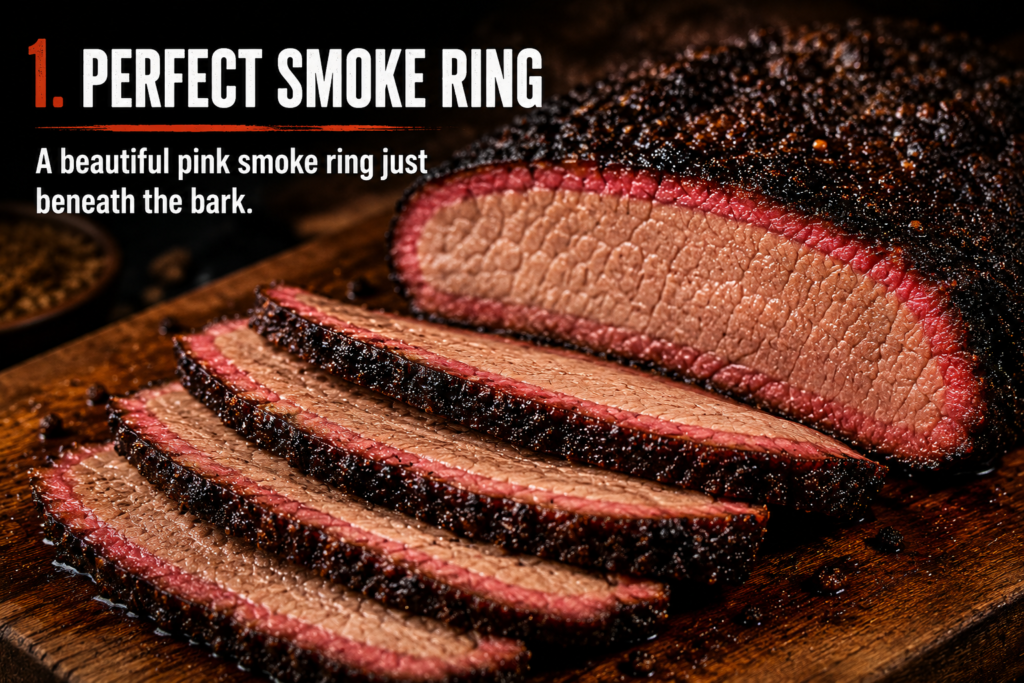
The smoke ring is the pink or reddish layer that forms just beneath the surface of smoked meat.
Unlike the gray-brown interior created by cooking, the smoke ring remains pink because the meat’s natural pigment—called myoglobin—doesn’t fully change color during cooking.
Many competition BBQ judges and backyard cooks appreciate a pronounced smoke ring because it gives smoked meat an attractive appearance.
However…
A smoke ring does NOT make meat taste smokier.
That’s one of the biggest myths in barbecue.
What Actually Creates the Smoke Ring?
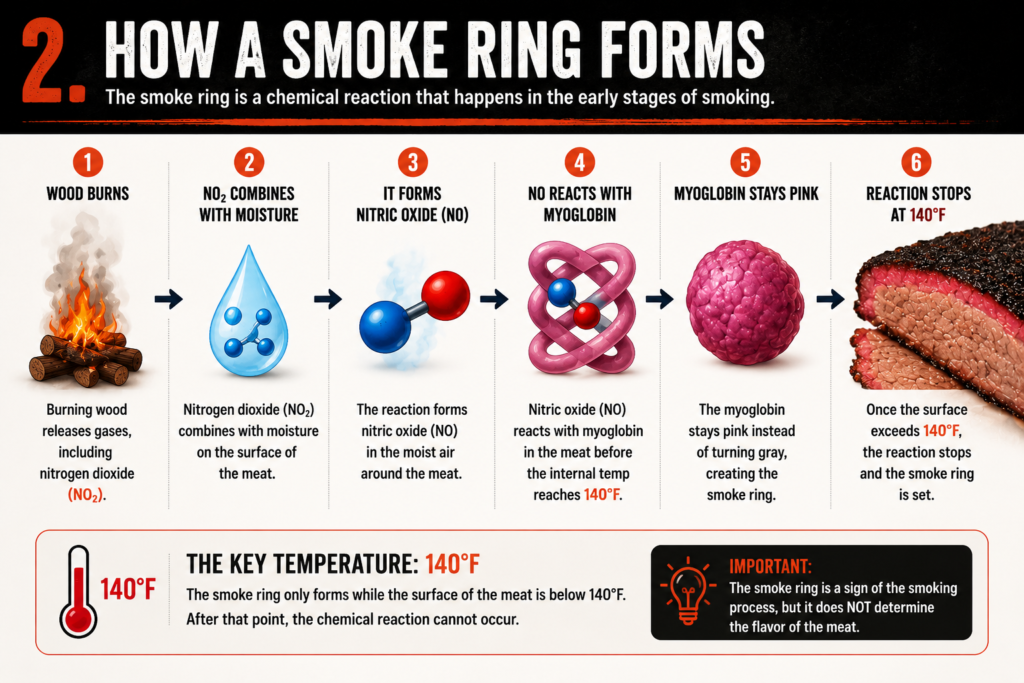
A smoke ring forms early in the cook, before the meat surface gets too hot.
Here’s what happens:
- Wood burns.
- Burning wood releases nitrogen dioxide (NO₂).
- Nitrogen dioxide combines with moisture on the meat.
- It forms nitric oxide (NO).
- Nitric oxide reacts with myoglobin before the meat reaches about 140°F.
- The pigment stays pink instead of turning gray.
Once the meat’s surface exceeds roughly 140°F, the reaction stops.
This means the smoke ring only develops during the beginning of the cook.
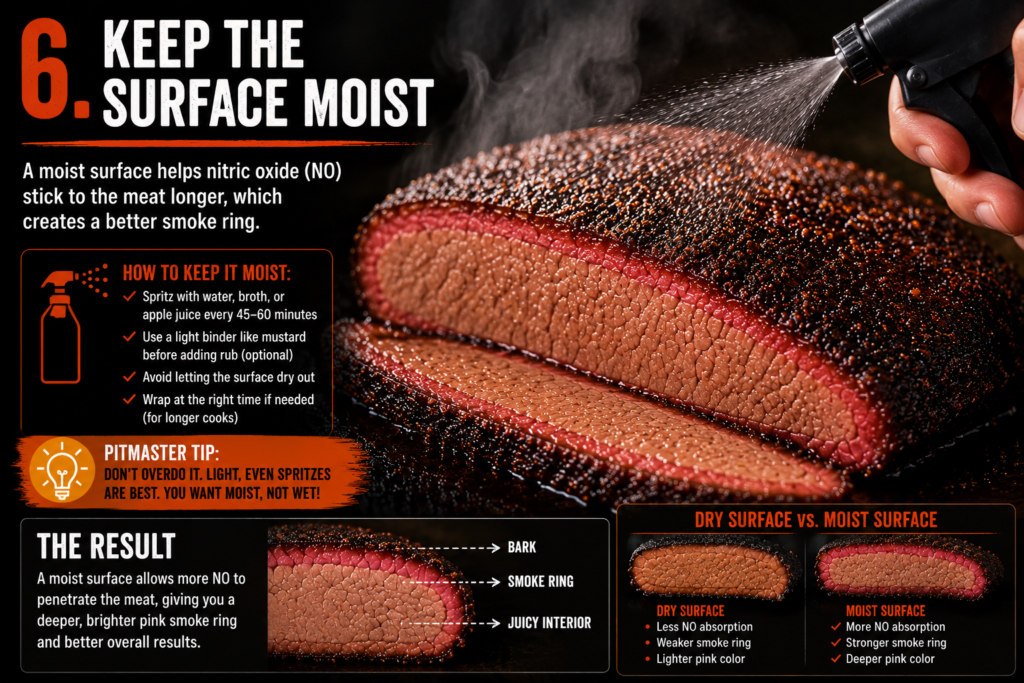
Why Moisture Matters
Moisture plays a major role in developing a smoke ring.
A damp surface allows combustion gases to dissolve more easily and penetrate the meat.
That’s why many pitmasters:
- Start with cold meat
- Avoid drying the surface
- Use water pans
- Occasionally spritz during the first few hours
Moisture keeps the chemical reaction going just a little longer.
Cold Meat Produces Better Smoke Rings
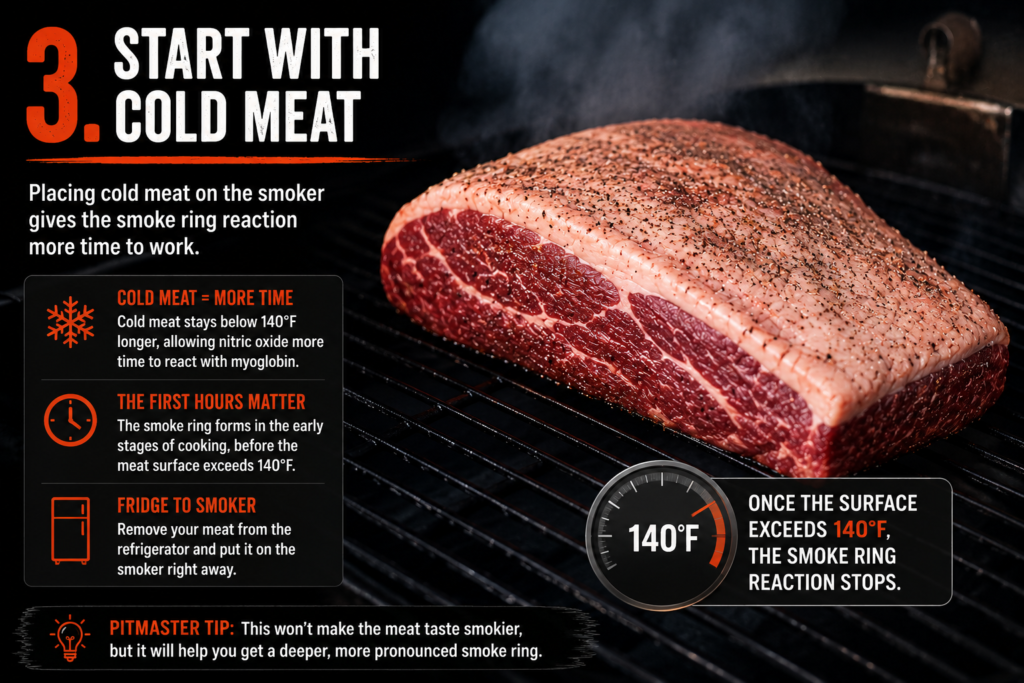
One of the easiest ways to improve your smoke ring is to place the meat on the smoker directly from the refrigerator. Cold meat can help create a deeper smoke ring because the reaction has more time to happen.
Cold meat stays below 140°F longer, giving nitric oxide more time to react with myoglobin. Temp Probes
This doesn’t necessarily make the meat taste better—but it usually creates a deeper smoke ring.
Does More Smoke Create a Bigger Smoke Ring?
Surprisingly…
Not necessarily.
Many beginners assume adding more wood automatically creates a larger smoke ring.
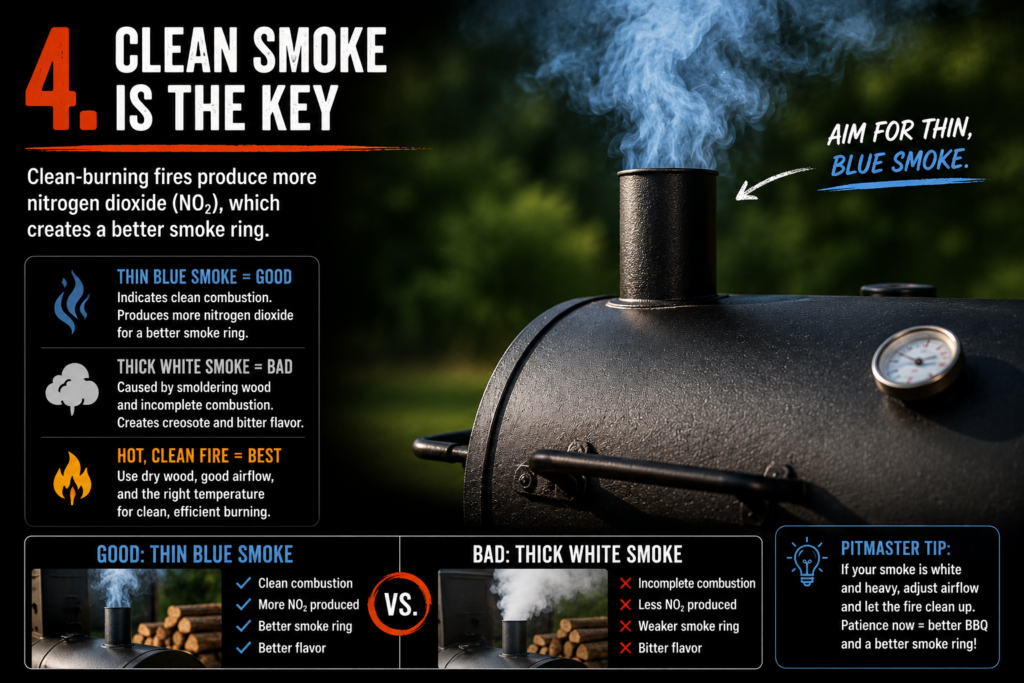
In reality, the amount of nitrogen dioxide produced during clean combustion matters much more than thick clouds of white smoke.
Clean-burning fires often create better smoke rings than dirty fires loaded with heavy smoke.Clean fire management is one of the best ways to improve your smoke ring.
Remember:
Thin blue smoke is your goal.
Which Smokers Produce the Best Smoke Rings?
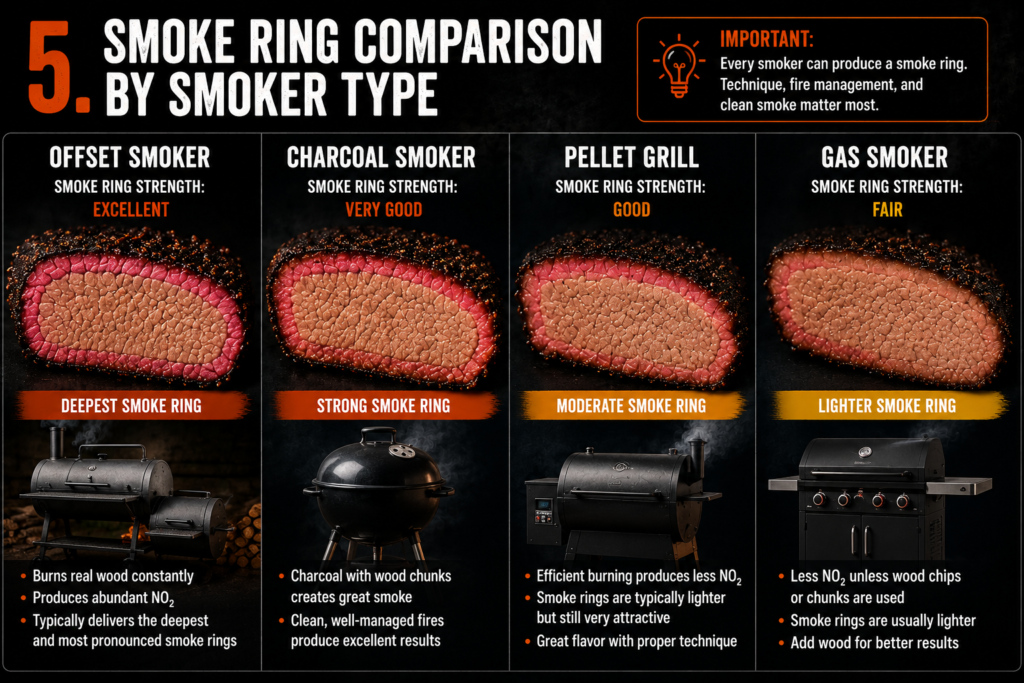
Every smoker can produce a smoke ring, but some naturally do it better.
Offset Smokers
Offset smokers generally create the deepest smoke rings because they burn real wood continuously.
Charcoal Smokers
Charcoal smokers also develop excellent smoke rings, especially when wood chunks are added.
Pellet Smokers
Pellet grills create attractive smoke rings, although they may be slightly lighter than traditional stick burners.
Many newer pellet grills burn very efficiently, which can reduce smoke ring intensity while still producing outstanding flavor.
Gas Smokers
Gas smokers often produce smaller smoke rings unless wood chunks or chips are used effectively.
Need to figure out what smoker type to buy… Here
Does Wrapping Affect the Smoke Ring?
Wrapping meat in butcher paper or foil does not create additional smoke ring.
By the time most pitmasters wrap:
- The meat is already above 140°F
- The smoke ring reaction has ended
Wrapping helps:
- Speed cooking
- Preserve moisture
- Improve tenderness
But it won’t deepen the smoke ring.
Everything to know about Wrapping… Here
Can You Fake a Smoke Ring?
Believe it or not…
Yes.
Some commercial barbecue operations use curing salts containing sodium nitrite to create an artificial smoke ring.
Because nitrites react with myoglobin exactly like nitric oxide, they produce the same pink appearance.
This is why:
- Corned beef
- Ham
- Bacon
- Pastrami
all remain pink after cooking.
While legal in some applications, competition barbecue generally values naturally produced smoke rings.
Does a Bigger Smoke Ring Mean Better BBQ?
Absolutely not.
This is probably the biggest misconception in barbecue.
Great barbecue depends on:
- Proper seasoning
- Smoke flavor
- Tenderness
- Moisture
- Bark development
- Fat rendering
The smoke ring is simply visual evidence of an early chemical reaction.
Some of the best briskets you’ll ever eat have modest smoke rings.
Likewise, some mediocre barbecue displays enormous smoke rings.
Judge barbecue by taste—not color.
Tips for Producing a Better Smoke Ring
If you’d like a deeper smoke ring naturally, follow these proven techniques:
1. Start With Cold Meat
Place meat on the smoker straight from the refrigerator.
2. Use Real Wood
Wood logs or chunks create more nitrogen dioxide than electric heat alone.
3. Maintain Clean Combustion
Avoid thick white smoke.
Aim for thin blue smoke throughout the cook.
4. Keep the Surface Moist
Use a water pan or lightly spritz during the first few hours. Here’s my pump sprayer!
5. Don’t Rush the Cook
Lower cooking temperatures give the smoke ring reaction more time before the meat surface exceeds 140°F.
Common Smoke Ring Myths
Myth: More smoke equals a bigger smoke ring.
False.
Clean combustion matters more than smoke volume.
Myth: Smoke ring equals smoke flavor.
False.
Flavor comes from compounds deposited on the meat—not the pink color.
Myth: Pellet grills can’t produce smoke rings.
False.
Modern pellet smokers absolutely produce smoke rings. A pellet grill can still create a smoke ring, even if it is lighter than one from an offset smoker.
Myth: Wrapping creates a smoke ring.
False.
The reaction is finished long before wrapping.
Final Thoughts
The smoke ring is one of barbecue’s most recognizable visual features, but it’s also one of the most misunderstood.
Rather than chasing the biggest smoke ring possible, focus on building great bark, rendering fat properly, maintaining clean fire management, and cooking to perfect tenderness.
If your brisket slices beautifully, tastes smoky, and melts in your mouth, you’ve succeeded—even if the smoke ring isn’t competition-sized.
The smoke ring is simply the icing on the cake.
Frequently Asked Questions
Is the smoke ring safe to eat?
Yes. A natural smoke ring is completely safe and is simply a reaction between combustion gases and the meat’s proteins.
At what temperature does the smoke ring stop forming?
Around 140°F internal temperature, the myoglobin changes permanently, ending the smoke ring reaction.
Does wrapping increase the smoke ring?
No. Wrapping only affects moisture retention and cooking speed.
Why doesn’t my pellet smoker produce a huge smoke ring?
Pellet grills burn very efficiently. They often produce slightly lighter smoke rings while still creating excellent smoke flavor.
Does a smoke ring affect taste?
No. It is almost entirely cosmetic.
🔥 Shop BSL Favorites on Amazon!
📄 Get Free BBQ Recipes, Guides & Charts
👉Check out the list of BBQ Gear I recommend and use
🔥 Follow Backyard Smoke Lab for more BBQ tips, recipes, and reviews
📺 YouTube: https://www.youtube.com/@backyardsmokelab
📸 Instagram: https://www.instagram.com/backyardsmokelab
🎵 TikTok: https://www.tiktok.com/@backyardsmoklab
🌐 Website: https://backyardsmokelab.com