
Few homemade pizza problems are more frustrating than building a beautiful pie and discovering that it will not slide off the peel. You shake harder, the toppings move, the dough stretches, and your round pizza becomes a folded mess.
Learning how to keep pizza from sticking to the peel comes down to controlling moisture, time, friction, and weight. A dry peel, the right dusting flour, organized toppings, and a confident launch can prevent nearly every failure.
The answer is not covering the peel with flour. Excess flour can burn on a hot pizza stone and leave a bitter crust. The goal is to use just enough separation while keeping the pizza moving.
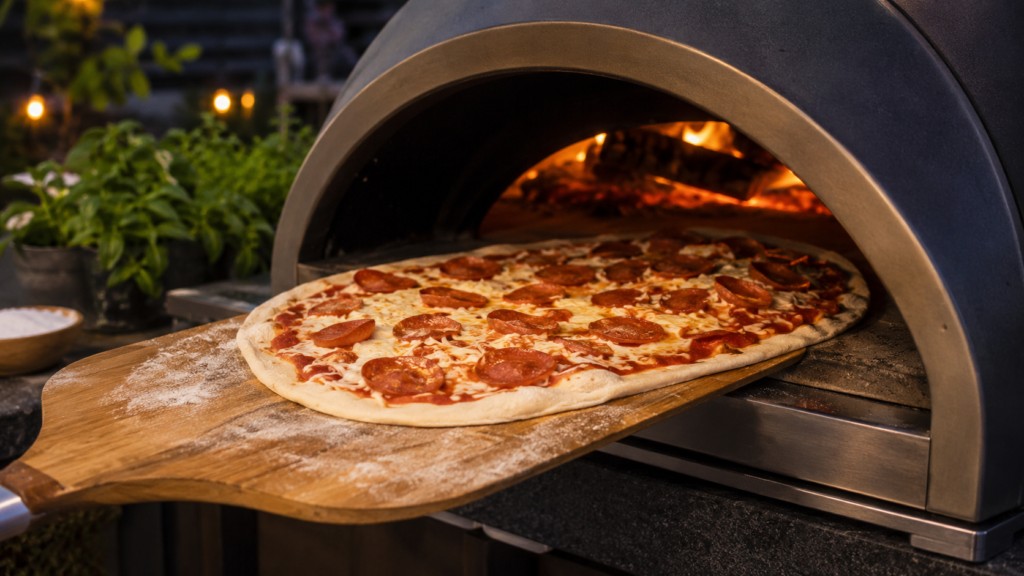
Why Does Pizza Stick to the Peel?
Raw pizza dough contains moisture. As it sits, that moisture absorbs the flour underneath and creates a bond with the peel. Sauce can leak through thin spots, wet toppings can release liquid, and a heavy pizza presses the dough more firmly against the surface.
Warm, overproofed, or high-hydration dough is also harder to handle. Most failed launches happen when several small problems combine. To understand how to keep pizza from sticking to the peel, focus on four variables: dough moisture, time on the peel, topping weight, and surface friction.
How to Keep Pizza From Sticking to the Peel
1. Start With a Clean, Dry Peel
Make sure the pizza peel is clean, cool, and completely dry. Water, oil, sauce, cheese, or pieces of old dough can act like glue.
Do not wash a wooden peel immediately before using it, and never rest your launching peel on top of a hot oven. Heat can soften the dough and make it stick before you are ready to launch.
2. Dust the Peel With Semolina
Semolina is one of the best materials for preventing pizza dough from sticking. Its coarse grains create a rolling layer between the dough and peel, almost like tiny ball bearings.
Sprinkle a light, even coating over the peel. You should still be able to see the surface beneath it. A 50/50 blend of semolina and regular flour also works well.
Rice flour is another option. Cornmeal works, but it creates more crunch and may burn in a very hot pizza oven. One of the simplest ways to learn how to keep pizza from sticking to the peel is to create a thin, even layer of coarse semolina before the dough touches the peel.
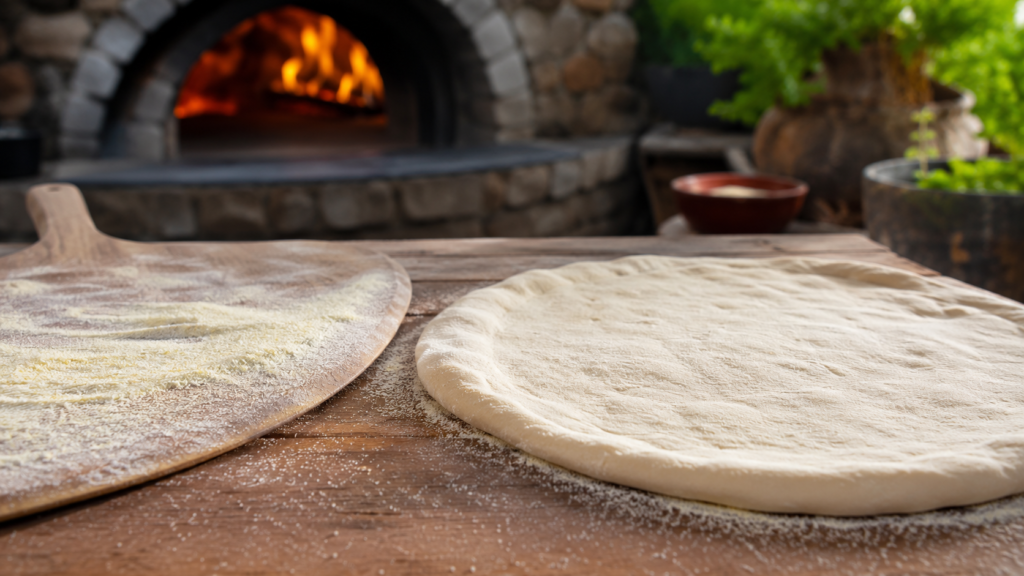
3. Avoid Using Too Much Flour
More flour does not always create a better launch. Excess flour falls onto the cooking surface, where it can burn, smoke, and leave a bitter flavor on the bottom of the pizza.
Use only enough semolina or flour to let the dough move freely. A perforated pizza peel can help extra flour fall away, but it cannot replace good preparation and quick assembly.
4. Use Manageable Pizza Dough
High-hydration pizza dough can create a light, airy crust, but it is also softer and stickier. Extremely wet dough makes launching harder, especially when you are still learning the technique.
A proven dough recipe around 60% to 65% hydration is manageable for many homemade pizza styles. Dough that spreads quickly, sticks heavily to your hands, or tears while stretching may be too warm, overproofed, or too wet.
Let refrigerated dough warm enough to stretch without tearing, but do not leave it in a hot kitchen until it becomes loose and sticky.
Here’s our Pizza Articles if you want additional information:
5. Stretch the Dough on the Counter
Complete most of the stretching on a lightly floured work surface. Once the dough reaches its final size, transfer it to the prepared peel and make only small adjustments.
Stretching aggressively on the peel increases the amount of time the dough remains in contact with the surface. It can also create thin spots or holes that allow sauce to leak through.
Before adding toppings, shake the peel gently. If an edge sticks, lift it and add a small pinch of semolina underneath.
6. Work Quickly After Moving the Dough
The clock starts when the dough touches the peel. Even a properly prepared pizza can begin sticking if it sits while you search for cheese, cut toppings, or wait for the oven to finish heating.
Prepare the sauce, cheese, toppings, semolina, and tools before stretching the dough. Build the pizza efficiently and launch it as soon as it is ready.
The best way to keep pizza from sticking to the peel is to limit the amount of time the raw dough remains on it.
7. Use Less Sauce and Fewer Wet Toppings
Heavy toppings press the dough into the peel and can shift during launch. Wet ingredients create even more trouble.
Drain fresh mozzarella, pat watery vegetables dry, and spread the sauce in a thin, even layer. Leave a clean border around the outside so sauce does not drip underneath the crust.
One small drop of sauce between the dough and peel can anchor the entire pizza.
Overloading a pizza also makes it harder to control. Start with lighter toppings until you become comfortable with your launching technique.
8. Check for Holes and Thin Spots
Inspect the stretched dough before topping it, especially near the center. A small tear can allow sauce to reach the peel and create an instant sticking point.
Pinch small holes closed before adding sauce. If the middle is nearly transparent, stop stretching.
Avoid dragging a topped pizza across the peel because this can reopen a repaired tear and spread moisture underneath the crust.
9. Perform the Shake Test
The shake test is your best warning system. Move the peel gently forward and backward after transferring the dough, after adding the sauce and cheese, and again immediately before launch.
The pizza only needs to move slightly as one unit. If one area sticks, lift the nearest edge and scatter a little semolina underneath it. Blowing gently beneath the lifted dough can also help create separation.
Do not simply shake harder. Aggressive movement usually sends the cheese and toppings forward before releasing the dough.
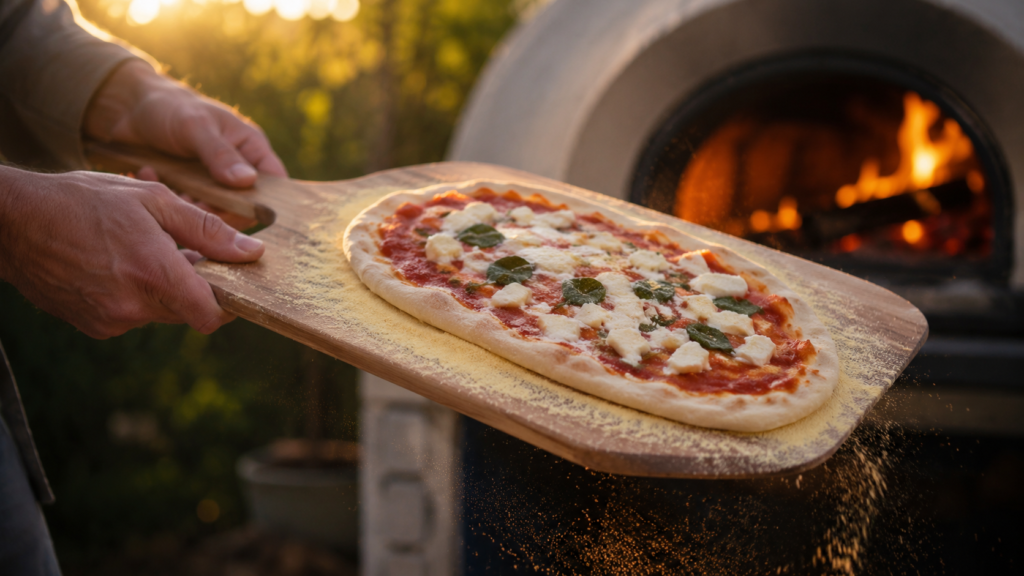
10. Launch With One Confident Motion
Position the front of the peel near the back of the hot pizza stone. Tilt it slightly until the leading edge of the pizza touches the surface, then pull the peel backward in one smooth movement.
Do not slowly push the pizza into the oven. A hesitant launch stretches the crust and allows the toppings to slide.
The peel should move backward while the pizza remains in place. You can practice this motion with an untopped dough round or a damp kitchen towel on a cold countertop.
How to Rescue a Pizza That Is Already Stuck
Stop shaking before the toppings fall off. Set the peel down and locate the stuck area.
Carefully lift the dough with a bench scraper or flexible spatula. Add a small amount of semolina beneath that spot and repeat until the pizza moves freely.
If the dough tears badly and sauce spreads underneath, fold the pizza in half and turn it into a calzone. Seal the edge, add fresh semolina to the peel, and launch it into the oven.
In a conventional home oven, parchment paper can be a beginner-friendly backup. Build the pizza on parchment and slide both onto the stone or baking steel. Follow the parchment manufacturer’s temperature limit, and do not use exposed parchment near the flame of an outdoor pizza oven.
Wood vs. Metal Pizza Peel
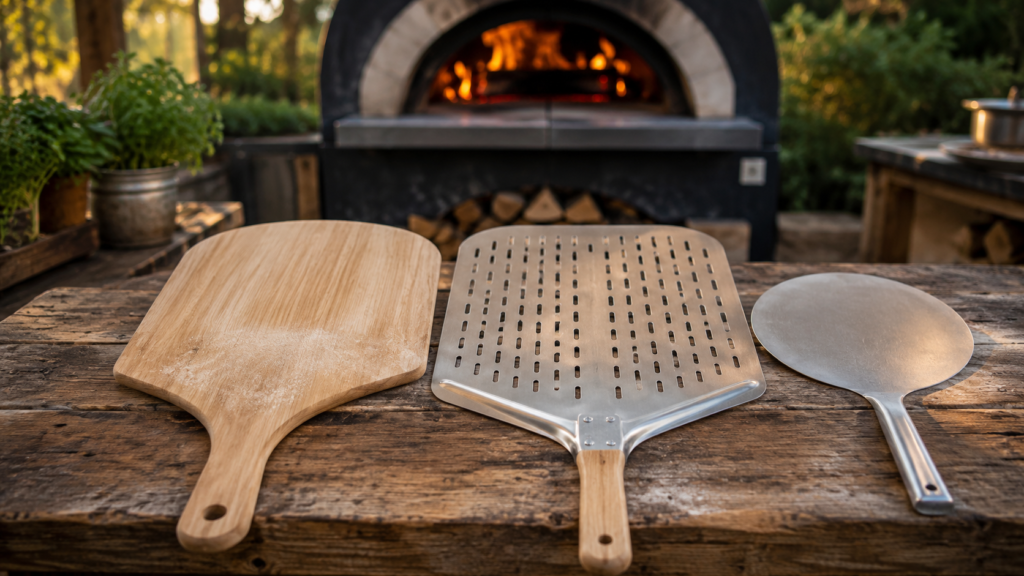
A wooden peel is forgiving for launching because raw dough is less likely to form a seal against its porous surface. 👉 Here’s the Peel I use.
A thin metal peel slides beneath a baked crust easily, making it excellent for turning and retrieving pizza. However, raw dough may stick more quickly to solid metal if the pizza sits too long.
A perforated metal peel can also work well for launching. The perforations reduce surface contact and allow extra flour or semolina to fall away before the pizza enters the oven.
Many home pizza makers get the most consistent results by using two tools:
- A wood or perforated peel for building and launching the pizza.
- A thin metal peel for turning and removing the cooked pizza.
Quick No-Stick Pizza Launch Checklist
Follow the same sequence every time:
- Preheat the pizza oven completely.
- Prepare and dry all the toppings.
- Keep the launching peel clean, cool, and dry.
- Dust the peel lightly with semolina.
- Stretch the dough on the counter.
- Transfer the dough and perform a shake test.
- Add a light layer of sauce, cheese, and toppings.
- Perform another shake test.
- Fix sticking areas with a pinch of semolina.
- Launch immediately with one smooth pullback.
Following a consistent routine makes pizza night less stressful and turns the launch into a repeatable technique.
👉Here’s a Beginner Pizza Kit I bought when started and was a big help!
Frequently Asked Questions
Is Flour or Semolina Better for a Pizza Peel?
Semolina is usually better because its coarse grains create more separation and are absorbed more slowly than fine flour. A mixture of semolina and regular flour also works well.
Why Does My Pizza Move at First but Stick After Topping?
The dough gradually absorbs the dusting flour while it sits. Sauce, wet toppings, and extra weight also press moisture toward the peel. Work faster, use lighter toppings, and perform another shake test before launching.
Should I Oil a Pizza Peel?
No. Oil can make raw pizza dough adhere to the working surface. Keep the peel dry and use a light dusting of semolina or flour.
Can I Use Parchment Paper to Launch Pizza?
Parchment paper can simplify transfers in a conventional home oven when used within its rated temperature. Avoid placing exposed parchment near the flame or extreme temperatures of an outdoor pizza oven.
What Is the Best Way to Keep Pizza From Sticking to the Peel?
Use a clean, dry peel with a light coating of semolina. Stretch the dough before transferring it, use light toppings, work quickly, perform several shake tests, and launch the pizza with one confident pullback motion.
Final Thoughts
Once you understand how to keep pizza from sticking to the peel, the solution becomes a repeatable process instead of a last-second rescue.
Begin with a dry peel, use a light layer of semolina, prepare your toppings in advance, work quickly, and shake-test the pizza throughout assembly.
Most importantly, launch with confidence. After a few successful attempts, the most stressful part of homemade pizza night will become one of the easiest.
🔥 Shop BSL Favorites on Amazon!
📄 Get Free BBQ Recipes, Guides & Charts
👉Check out the list of BBQ Gear I recommend and use
🔥 Follow Backyard Smoke Lab for more BBQ tips, recipes, and reviews
📺 YouTube: https://www.youtube.com/@backyardsmokelab
📸 Instagram: https://www.instagram.com/backyardsmokelab
🎵 TikTok: https://www.tiktok.com/@backyardsmoklab
🌐 Website: https://backyardsmokelab.com