
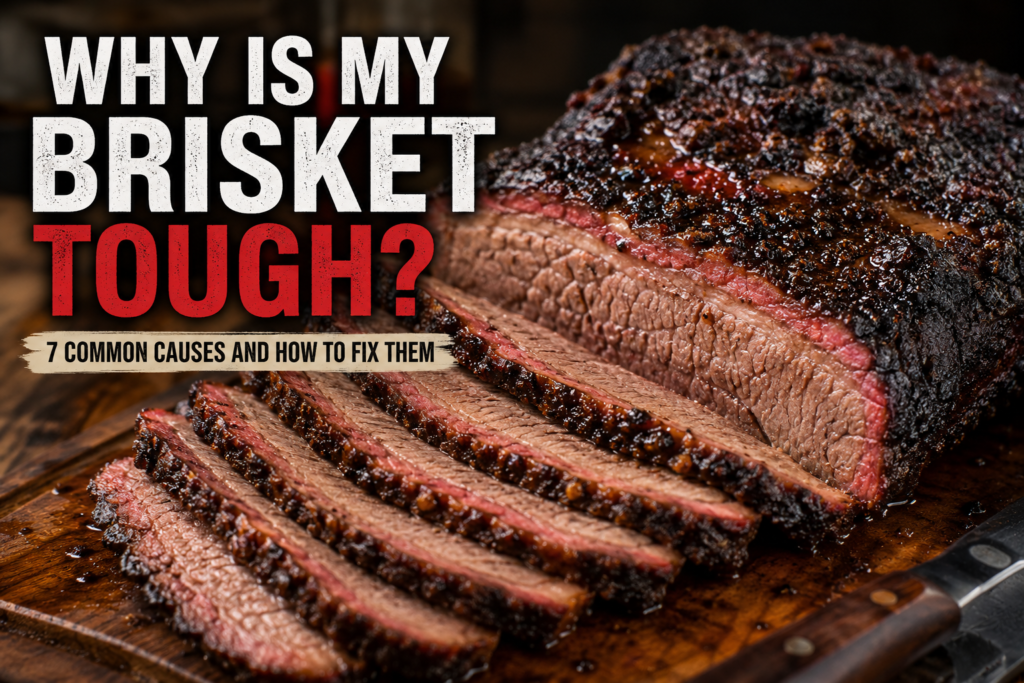
Nothing Is More Frustrating Than a Tough Brisket
You spent 12 to 16 hours tending the smoker. The bark looks beautiful, the smoke ring is visible, and the aroma is incredible. Then you slice into your brisket only to discover it is tough, chewy, and difficult to eat.
A tough or chewy brisket is usually undercooked. Even if the brisket has reached 195–205°F, the collagen may not have broken down enough to make the meat tender. If a probe still meets resistance in the flat, keep cooking—the brisket isn’t finished yet.
Overcooking, slicing with the grain, insufficient resting, excessive heat and a lean brisket can also cause poor texture. The key is figuring out whether your brisket is chewy and undercooked or dry and overcooked, because the fixes are completely different.
In this guide, we’ll break down the seven most common reasons brisket gets tough and show you exactly how to achieve tender, juicy slices every time. Here’s a preview:
Your Brisket Undercooked or Overcooked?
| What you’re seeing | Likely cause | What to do |
|---|---|---|
| Chewy/rubbery but still moist | Undercooked | Keep cooking |
| Probe meets resistance | Undercooked | Cook until probe tender |
| Flat tough, point tender | Flat isn’t ready/dried | Check flat separately |
| Dry and crumbly | Overcooked | Add moisture/repurpose |
| Tender but chewy when eating | Sliced with grain | Slice across grain |
| Juice runs everywhere when sliced | Insufficient rest | Rest longer next time |
What Makes Brisket Tender?
Before discussing what goes wrong, it’s important to understand what makes brisket tender in the first place.
Brisket comes from the chest muscles of the cow. Because these muscles support a large portion of the animal’s weight, they contain significant amounts of connective tissue and collagen.
During a low-and-slow cook, that collagen slowly breaks down into gelatin. This process creates the moist, tender texture that great barbecue brisket is known for.
When brisket turns out tough, it usually means one of two things:
- The collagen hasn’t fully broken down.
- The meat has lost too much moisture.
Let’s look at the most common causes.
1. The Brisket Is Actually Undercooked
The Most Common Cause of Tough Brisket
Many backyard cooks pull their brisket when it reaches a specific temperature, often around 195°F.
The problem is that every brisket is different.
Some briskets become tender at 198°F, while others need to reach 205°F or higher before the connective tissue fully breaks down.
How To Fix It
Instead of cooking strictly to temperature, cook to tenderness.
A properly cooked brisket should allow a temperature probe to slide into the flat with almost no resistance.
Think of inserting the probe into warm butter.
Tip
Begin checking for tenderness between 198°F and 205°F internal temperature. Here’s suggestions for thermometers. I use this thermometer!
What I’ve learned: I don’t pull brisket just because the thermometer reaches 203°F. I start probing the flat around 198°F and let the feel of the meat determine when it’s done.
2. The Brisket Was Cooked Too Fast

Brisket is not a race.
Cooking at excessively high temperatures can cause muscle fibers to tighten before collagen has enough time to break down.
This often results in a brisket that appears done but remains chewy.
Ideal Smoking Temperatures
- 225°F to 250°F for traditional barbecue
- 250°F to 275°F for a slightly faster cook
Avoid
- Consistently cooking above 300°F
- Frequent temperature spikes
- Poor airflow management
3. The Brisket Was Overcooked
Yes, brisket can become tough from being overcooked as well.
When cooked beyond its ideal finish point, moisture begins leaving the meat faster than collagen can help retain it.
The result is dry, crumbly slices that feel tough despite being fully cooked.
Signs of Overcooked Brisket
- Crumbly slices
- Dry texture
- Meat falls apart instead of slicing cleanly
- Flat section feels dry
Prevention
Monitor tenderness closely once internal temperatures reach 198°F.
4. You Didn’t Rest the Brisket Long Enough
One of the biggest mistakes new pitmasters make is slicing immediately after removing the brisket from the smoker.
During cooking, juices are pushed toward the center of the meat.
Resting allows those juices to redistribute throughout the brisket.
Recommended Rest Time
- Minimum: 1 hour
- Better: 2 to 4 hours
- Competition-style: 4 to 6 hours in a holding oven or insulated cooler
A proper rest can dramatically improve tenderness and moisture retention. Grab a cooler big enough for your brisket and line it with some terry cloth bath towels. Wrap that brisket in aluminum foil or butcher paper used in the smoker. place in cooler and cover with another bath or beach towel.
5. The Flat Cooked Faster Than the Point
Understanding Brisket Anatomy
A whole packer brisket consists of two muscles:
The Flat
- Leaner
- Less fat
- More prone to drying out
The Point
- Higher fat content
- More forgiving
- Often more tender
Because the flat contains less intramuscular fat, it can become tough before the point finishes rendering.
Solution
Position the thicker point toward the hotter area of your smoker whenever possible.
6. Poor Temperature Monitoring
Many tough brisket issues can be traced back to inaccurate temperature readings.
Factory smoker thermometers are often off by 25°F or more.
If your smoker reads 225°F but is actually running 300°F, your brisket may cook far faster than expected.
Best Practice
Use:
- One probe at grate level
- One probe in the brisket flat
Accurate temperatures produce consistent results. Here’s best options for wireless probes.
7. The Brisket Grade Was Too Lean

Not all briskets are created equal.
Lower-grade briskets contain less marbling, making them more difficult to cook successfully.
Recommended Grades
USDA Prime
Best choice for most backyard cooks. Never had a bad prime brisket!
Choice
Excellent value and widely available.
Select
Can produce good results but requires extra attention.
More marbling generally means more forgiveness and better moisture retention.
8. You Sliced the Brisket With the Grain
Even a perfectly cooked brisket can seem tough or chewy if it’s sliced in the wrong direction. Brisket is made up of long muscle fibers, and when you slice with the grain, those fibers stay long and require more chewing.
For more tender slices, always cut across the grain. This shortens the muscle fibers and makes each bite easier to pull apart.
One thing that makes brisket tricky is that the flat and point have different grain directions. Before cooking, take a moment to notice which direction the grain runs through the flat. I like to make a small cut or notch in one corner as a reminder of the grain direction once the bark has formed.
When you’re ready to slice:
- Separate the point and flat if necessary.
- Identify the grain direction in each muscle.
- Slice across the grain, not parallel to it.
- Aim for roughly pencil-thick slices through the flat.
BSL Tip: If your brisket is moist and probe-tender but still seems unusually chewy, check your slicing direction before blaming the cook. Sometimes the brisket isn’t tough at all—it was simply sliced with the grain.
Can You Save a Tough Brisket?
Absolutely.
If Your Brisket Is Undercooked
If it’s still whole:
Wrap it → return to smoker/oven → continue cooking → check flat for probe tenderness.
If Your Brisket Is Already Sliced and Dry
You can’t reverse the moisture loss, but you can:
Add warm jus/broth → chop for sandwiches → brisket chili → tacos → nachos.
Your existing article already has most of that information.
Many “failed” briskets still make incredible meals.
The Backyard Smoke Lab Method for Tender Brisket
For consistently tender brisket, follow this simple process:
- Smoke at 250°F.
- Monitor internal temperature.
- Wrap during the stall if desired.
- Begin checking tenderness at 198°F.
- Pull when probe tender.
- Rest at least two hours.
- Slice against the grain.
Follow these steps and you’ll dramatically increase your chances of producing competition-worthy brisket.
Frequently Asked Questions About Tough Brisket
Is tough brisket usually undercooked?
Yes. A tough or chewy brisket is usually undercooked, especially if the meat is still moist but difficult to pull apart. Brisket contains a lot of connective tissue that needs enough time and heat to break down into gelatin. Don’t rely on internal temperature alone—if a probe still meets resistance in the flat, the brisket likely needs more time.
Does brisket get tough before it gets tender?
Yes. During the cook, brisket can remain quite tough even after reaching temperatures that would fully cook most meats. As the brisket continues cooking, its collagen gradually breaks down and the meat becomes tender. This is why probe tenderness is more important than pulling the brisket at one exact temperature.
Why is my brisket chewy but not dry?
A brisket that is chewy but still moist is a strong sign that it may be undercooked. The meat has retained moisture, but the connective tissue hasn’t broken down enough yet. Continue cooking until a probe slides into the thickest part of the flat with very little resistance.
Can an overcooked brisket still be tough?
It can seem tough, but overcooked brisket usually presents differently from undercooked brisket. Undercooked brisket tends to be chewy and resistant, while overcooked brisket is more likely to be dry, crumbly, or fall apart when sliced. Looking at the texture and moisture level can help determine what went wrong.
Can I put a tough brisket back on the smoker?
If the brisket is tough because it is undercooked, yes. Wrap it to help retain moisture and return it to the smoker or a low oven. Continue cooking and check the flat periodically for probe tenderness rather than waiting for a specific internal temperature.
Why is the flat of my brisket tough but the point is tender?
The flat is considerably leaner than the point and can cook differently. Don’t judge the entire brisket by the point alone. Use the thickest part of the flat as your primary tenderness check, and remove the brisket when the probe slides into the meat with very little resistance.
Can slicing brisket the wrong way make it tough?
Absolutely. Slicing with the grain leaves long muscle fibers intact, making even properly cooked brisket seem chewy. Slice across the grain to shorten those fibers and produce a more tender bite. Remember that the grain changes direction between the brisket’s flat and point.
What internal temperature makes brisket tender?
Most briskets become tender somewhere around 195–205°F, but there is no single temperature that guarantees tenderness. Start checking the flat as the brisket approaches the finishing range and let probe tenderness—not the number on the thermometer—tell you when it’s done
Final Thoughts
If your brisket is tough, don’t automatically assume you ruined it.
In most cases, tough brisket is simply undercooked and needs additional time for the collagen to fully break down.
Focus on tenderness rather than a specific temperature, allow plenty of resting time, and maintain stable smoker temperatures throughout the cook.
Master those fundamentals, and you’ll be serving juicy, tender brisket that friends and family talk about long after the meal is over.
Happy smoking!
🔥 Shop BSL Favorites on Amazon!
📄 Get Free BBQ Recipes, Guides & Charts
👉Check out the list of BBQ Gear I recommend and use
🔥 Follow Backyard Smoke Lab for more BBQ tips, recipes, and reviews
📺 YouTube: https://www.youtube.com/@backyardsmokelab
📸 Instagram: https://www.instagram.com/backyardsmokelab
🎵 TikTok: https://www.tiktok.com/@backyardsmoklab
🌐 Website: https://backyardsmokelab.com