
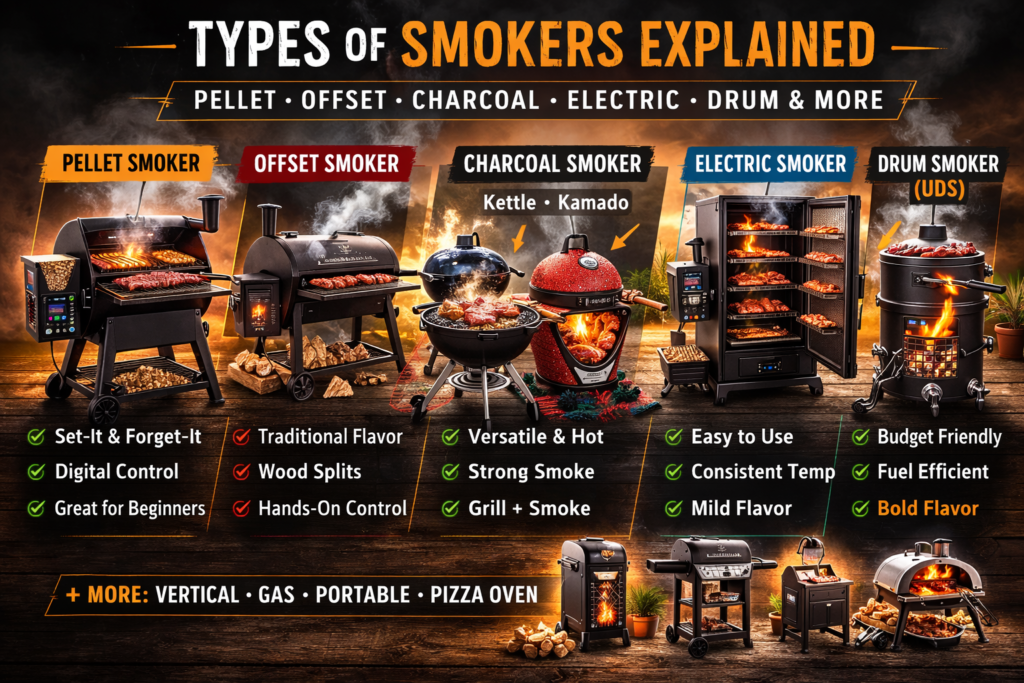
In this guide to the types of smokers, you’ll learn how each style works and which one fits your backyard cooking style.
What type of smoker should I buy?
Pellet? Offset? Charcoal? Electric? Drum?
They all cook low and slow.
They all use smoke.
But they behave very differently.
This guide breaks down the different types of smokers, how they work, who they’re best for, and what you can realistically expect from each. Whether you’re brand new or upgrading your setup, this will help you make the right decision.
Types of Smokers (Quick Comparison for Beginners)
A smoker is a cooking device that uses indirect heat and wood smoke to cook food at low temperatures — typically between 200°F and 275°F — over an extended period of time. When comparing types of smokers, the biggest differences come down to fuel type, temperature control, and how hands-on you want to be.
Unlike grilling (direct high heat), smoking is about:
- Temperature control
- Airflow management
- Fuel management
- Time and patience
Now let’s break down the major types.
1️⃣ Pellet Smokers (Set-It-and-Forget-It Control)
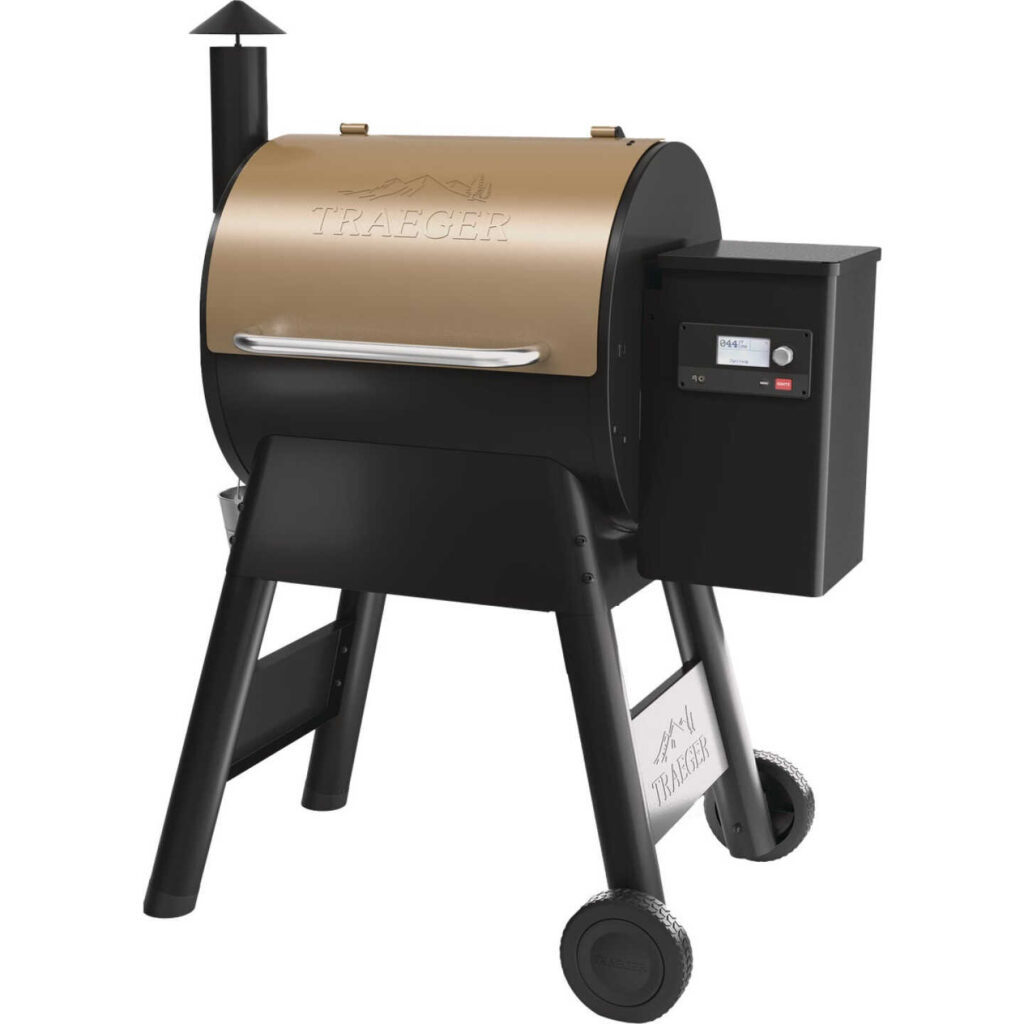
How Pellet Smokers Work
Pellet smokers burn compressed hardwood pellets. An auger feeds pellets into a burn pot, and a digital controller regulates temperature automatically.
Think of it as a wood-fired oven with thermostat control.
Best For:
- Beginners
- Busy cooks
- Overnight briskets
- Consistency-focused cooks
Pros:
- Very stable temperatures
- Easy to operate
- Great for long cooks (10+ hours)
- Excellent versatility (smoke, roast, bake)
Cons:
- Requires electricity
- Smoke flavor is lighter than stick burners
- Mechanical parts can fail over time
Flavor Profile:
Clean, mild wood smoke. You can intensify flavor using lower temps early in the cook.
Pellet smokers are often the easiest entry point into barbecue. If you’re looking for convenience without sacrificing quality, this category is hard to beat.
2️⃣ Offset Smokers (Traditional Stick Burners)
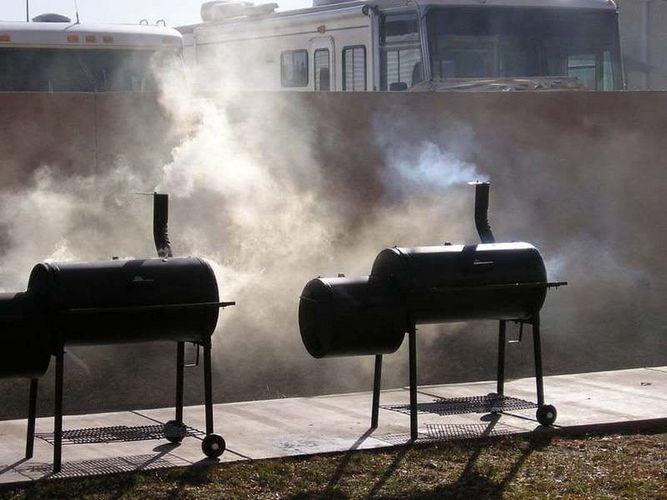
How Offset Smokers Work
An offset smoker has a firebox attached to the side of the main cooking chamber. You burn wood splits in the firebox, and heat + smoke travel across the meat before exiting the chimney.
This is traditional Texas-style barbecue equipment.
Best For:
- Traditionalists
- Fire managers
- Deep smoke flavor seekers
Pros:
- Rich, heavy smoke flavor
- No electricity needed
- True fire control
Cons:
- Steep learning curve
- Requires constant tending
- Fuel-intensive
Flavor Profile:
Deep, bold, complex smoke flavor.
Offset smokers require managing airflow and fuel manually. If you love fire management and hands-on cooking, this is the purest form of backyard smoking.
3️⃣ Charcoal Smokers (Kettle, Bullet & Kamado Style)

How Charcoal Smokers Work
Charcoal smokers use lump charcoal or briquettes as the primary heat source. Wood chunks are added for smoke flavor.
There are several styles:
- Kettle grills (used with indirect setup)
- Bullet smokers (vertical water smokers)
- Ceramic kamado cookers
Best For:
- Budget-friendly smoking
- Versatility (grill + smoke)
- Strong smoke flavor
Pros:
- Excellent flavor
- Affordable entry point
- No electricity needed
- Can sear and grill as well
Cons:
- Requires vent management
- Temperature control takes practice
Flavor Profile:
Stronger than pellet, lighter than offset (depending on wood use).
Charcoal smokers offer a balance between control and flavor intensity, making them one of the most versatile options available.
4️⃣ Electric Cabinet Smokers
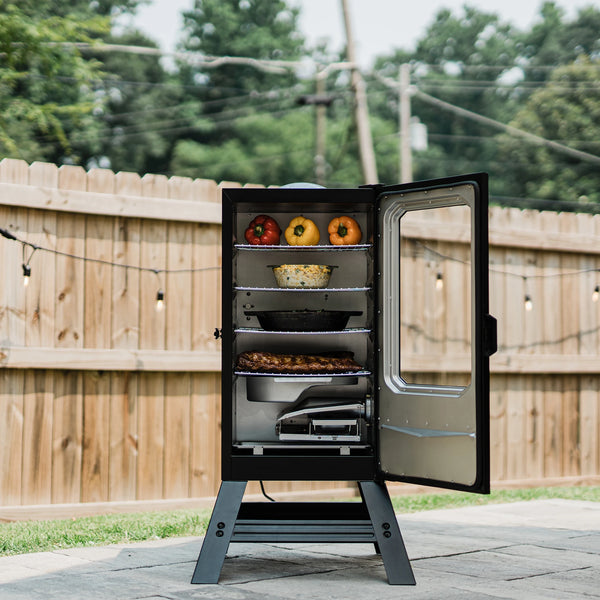
How Electric Smokers Work
Electric smokers use a heating element to generate heat. Wood chips are added in a tray to create smoke.
You plug them in, set the temperature, and they maintain heat automatically.
Best For:
- Absolute beginners
- Apartment or limited space users
- Low-effort smoking
Pros:
- Easiest to operate
- Consistent temperature
- Affordable models available
Cons:
- Light smoke flavor
- Requires electricity
- Less traditional barbecue experience
Flavor Profile:
Mild smoke.
Electric smokers are a great way to learn timing and internal meat temperatures without the complexity of fire management.
5️⃣ Drum Smokers (UDS – Ugly Drum Smoker)
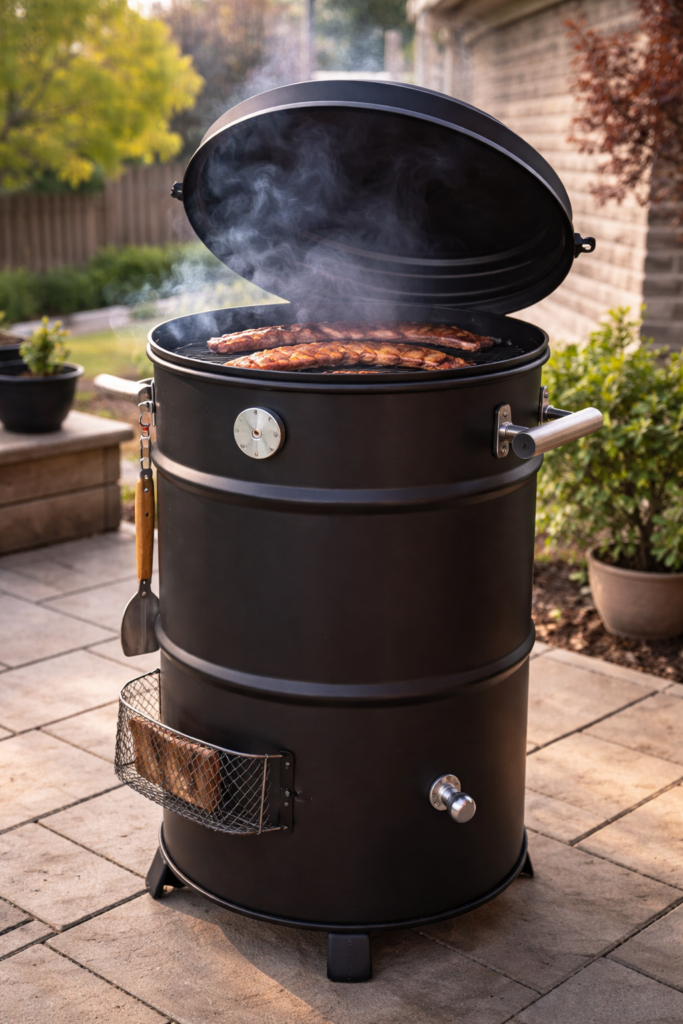
How Drum Smokers Work
Drum smokers are vertical barrel-style cookers that burn charcoal at the bottom with airflow entering from the base and exiting through top vents.
They are extremely efficient and surprisingly stable once dialed in.
Best For:
- Budget-conscious cooks
- DIY enthusiasts
- High heat efficiency
Pros:
- Excellent flavor
- Efficient fuel use
- Simple construction
Cons:
- Basic features
- Manual airflow control
Flavor Profile:
Bold charcoal-driven smoke.
Drum smokers are underrated workhorses that deliver serious barbecue flavor at a lower cost.
Pellet vs Offset vs Charcoal: Which Smoker Is Best?
There is no universal “best smoker.”
The right smoker depends on:
- How involved you want to be
- Your budget
- Available space
- Desired smoke intensity
- Comfort with fire management
If You Want:
- Maximum convenience → Pellet
- Traditional heavy smoke → Offset
- Versatility + value → Charcoal
- Simplicity → Electric
- Budget flavor machine → Drum
Each path produces excellent barbecue when used correctly.
What Beginners Should Consider Before Buying
Before choosing a smoker, ask yourself:
- Do I want to manage fire manually?
- Will I cook overnight briskets?
- Do I have access to electricity?
- How much space do I have?
- What’s my realistic budget?
Buying the wrong style can lead to frustration — not because it’s bad equipment, but because it doesn’t match your cooking style.
Final Thoughts: The Best Type of Smoker Is the One You’ll Actually Use
The truth is this:
A well-managed charcoal kettle can outperform an expensive pellet grill.
A skilled offset cook can produce world-class brisket.
A beginner on an electric smoker can still turn out incredible ribs.
Equipment matters — but technique matters more.
No matter which type of smoker you choose, success comes down to:
- Controlling temperature
- Managing airflow
- Choosing the right wood
- Using accurate thermometers
- Understanding the stall and wrapping
Master those fundamentals and any smoker becomes a powerful tool. Once you understand the types of smokers, choosing the right one becomes less about hype and more about how you actually like to cook.
🔥 Follow Backyard Smoke Lab for more BBQ tips, recipes, and reviews
📺 YouTube: https://www.youtube.com/@backyardsmokelab
📸 Instagram: https://www.instagram.com/backyardsmokelab
🎵 TikTok: https://www.tiktok.com/@backyardsmoklab
🌐 Website: https://backyardsmokelab.com
Pingback: Pellet Smoker Low Temperature Problems (Why 225°F Is Hard to Hold)
Pingback: Best BBQ Thermometers for Backyard Smoking (2026 Guide)