
Many pellet grill owners notice the same frustrating pattern:
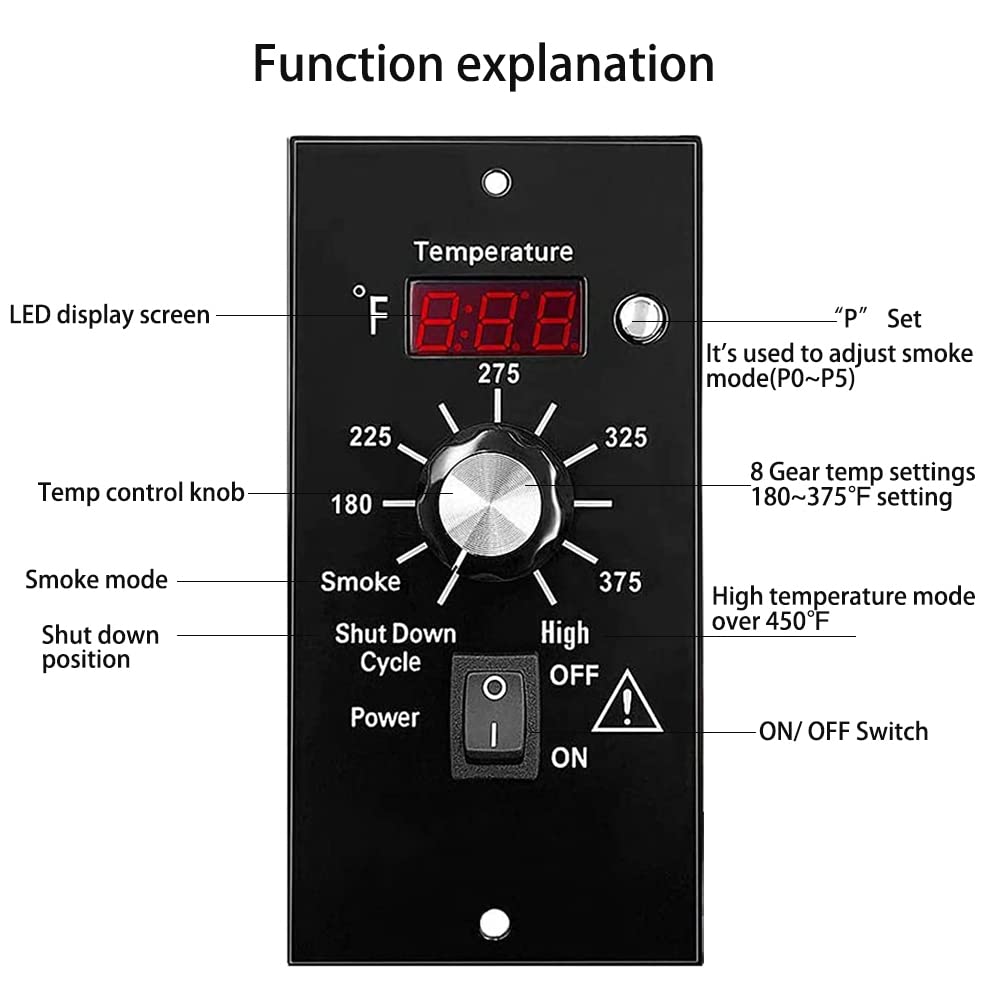
their smoker runs fine at 250–275°F, but once they try to cook at 225°F or lower, temperatures become unstable. Pellet smoker low temperature problems are one of the most common frustrations when cooking at 225°F or below.
The grill overshoots, drops too low, or constantly cycles without settling. This behavior is common — and in most cases, it’s not a defect.
Pellet smokers are simply operating at the edge of their comfort zone at low temperatures. Understanding why this happens makes it much easier to work around.
Pellet Smokers Are Designed to Burn, Not Smolder
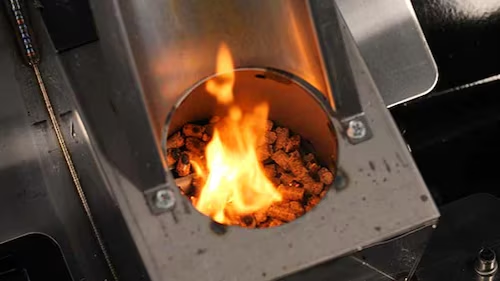
Pellet grills create heat by feeding hardwood pellets into a firepot and controlling airflow with a fan. This system works best when the fire is active and clean-burning.
At low temperatures:
- Pellet feed slows dramatically
- The fire struggles to stay consistent
- Small pellet changes cause large temperature reactions
Unlike charcoal, pellet grills are not designed to “idle” naturally. They prefer steady combustion, not near-extinction fires.
Low Temperatures Magnify Heat Cycling
Pellet grills regulate temperature by cycling fuel on/off Slow/Fast.
At higher temperatures:
- Heat cycles are smoother
- Minor overshoots go unnoticed
- Recovery is fast
At 225°F and below:
- Every pellet feed matters
- Overshoots feel dramatic
- Recovery after heat loss is slow
This is why temperature swings that are perfectly normal at 275°F feel problematic at 225°F.
Cold Weather Makes Low-Temp Stability Harder
Cold ambient temperatures pull heat from the cooking chamber faster than the grill can replace it.
At low setpoints:
- Heat loss outpaces pellet burn
- The controller overcorrects
- Temperature spikes become more common
A grill trying to hold 225°F at 30°F ambient temperature is working far harder than one holding 275°F on a warm day.
This is also why winter cooks expose stability issues that never appear in summer.
Low Temperatures Magnify Heat Cycling
Pellet grills regulate temperature by cycling fuel on/off slower/faster.
At higher temperatures:
- Heat cycles are smoother
- Minor overshoots go unnoticed
- Recovery is fast
At 225°F and below:
- Every pellet feed matters
- Overshoots feel dramatic
- Recovery after heat loss is slow
This is why temperature swings that are perfectly normal at 275°F feel problematic at 225°F.
(This behavior connects directly to how pellet grills cycle heat — covered in this article.)
Cold Weather Makes Low-Temp Stability Harder
Cold ambient temperatures pull heat from the cooking chamber faster than the grill can replace it.
At low setpoints:
- Heat loss outpaces pellet burn
- The controller overcorrects
- Temperature spikes become more common
A grill trying to hold 225°F at 30°F ambient temperature is working far harder than one holding 275°F on a warm day.
This is also why winter cooks expose stability issues that never appear in summer. If you ever had a winter overnight brisket turn out with a dry bottom… perfect example.
Why Pellet Quality Matters More at Low Temps
At 225°F, pellets burn slowly. That makes pellet quality critical.
Poor pellets can:
- Smolder instead of burn cleanly
- Produce inconsistent heat
- Create delayed ignition cycles
If low-temperature performance suddenly worsens, pellet condition is one of the first things to check.
What Pellet Smoker Low Temperature Behavior Is Normal at 225°F?
Understanding what’s normal helps prevent over-adjustment.
Generally normal behavior:
- ±20–25°F swings
- Brief overshoots after startup (20 min)
- Slow recovery after lid openings
Potential issues:
- Repeated swings over 50°F
- Inability to climb back to set temp
- Flameouts or repeated shutdowns
If food is cooking evenly and safely, minor fluctuations are usually not a concern.
How to Improve Low-Temperature Stability (What Actually Works)
You can’t eliminate swings entirely — but you can reduce them.
1. Increase Thermal Mass and Insulation
- Use a thermal blanket in cold weather
- Shield the grill from wind
- Cook with heavier grates when possible
Reducing heat loss stabilizes the burn cycle.
2. Avoid Chasing the Controller
Constant temperature changes force the controller to restart its learning cycle.
Set the temperature and judge performance over 15–20 minutes, not seconds.
3. Trust Grate-Level Temperature, Not the Display
Food responds to grate temperature, not air spikes.
Monitoring where the food sits prevents unnecessary adjustments and frustration.
4. Consider Cooking Slightly Higher
Many experienced pitmasters quietly cook at 235–250°F instead of forcing 225°F.
The results are often identical — with far less stress.
5. Maybe Cold Smoke Option
Some pellet grills have an internal fan that circulates air without engaging the fire pot. Smoking at temps 180–225°F or lower can be produced using a smoke tube loaded with pellets. Great option for lower temp smoking foods like cheeses, Salmon etc.
This option is outside conventional for set-and-forget pellet smoker beginners but worth noting.
When Low-Temperature Problems Might Indicate an Issue
Occasionally, instability does point to a mechanical problem.
Possible causes include:
- Ash buildup in the firepot
- Dirty temperature probe
- Pellet feed inconsistencies
- Controller calibration issues
Cleaning and fresh pellets solve most problems before parts replacement is needed.
Final Thoughts: Low Temps Are the Hardest Test for Pellet Grills
Pellet smokers excel at steady, moderate heat.
Low-temperature cooking simply demands more patience and understanding.
Once you recognize what’s normal — and how to reduce heat loss — cooking at 225°F becomes far less frustrating and far more predictable.
Related Guides
- How to Fix Temperature Swings on Pellet Smokers
- Best BBQ Thermometers for Backyard Smoking
- Maybe looking for another type of Smoker?
🔥 Follow Backyard Smoke Lab for more BBQ tips, recipes, and reviews
📺 YouTube: https://www.youtube.com/@backyardsmokelab
📸 Instagram: https://www.instagram.com/backyardsmokelab
🎵 TikTok: https://www.tiktok.com/@backyardsmoklab
🌐 Website: https://backyardsmokelab.com
Pingback: Types of Smokers Explained: Pellet, Offset & More