
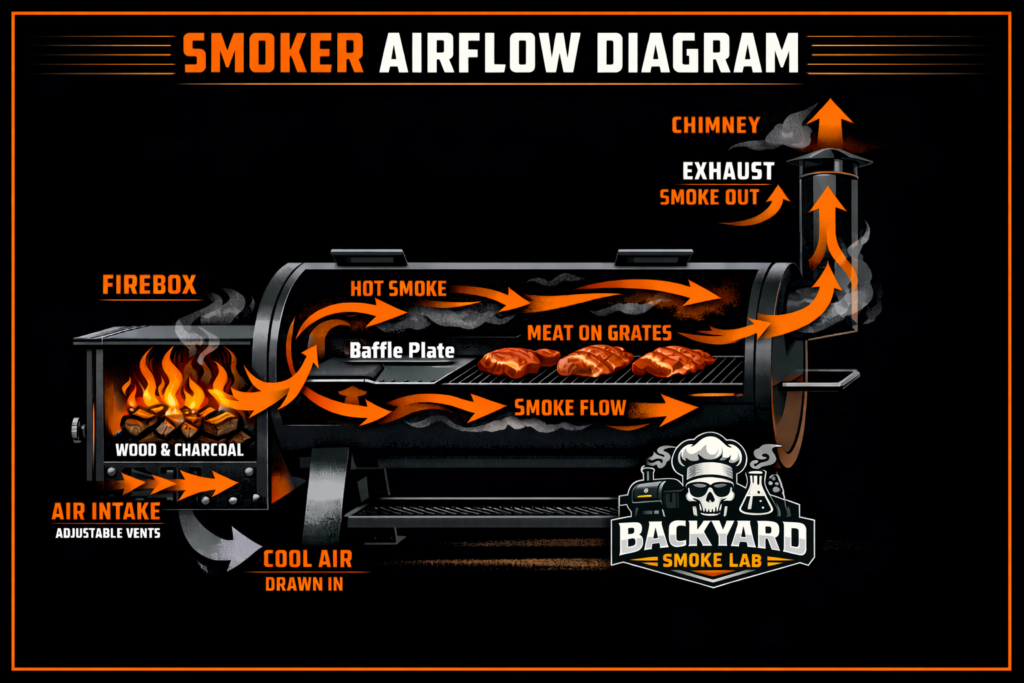
BBQ smoker airflow control is the one skill that determines success or failure when smoking meat.
It’s airflow control.
Master airflow, and you master temperature.
Master temperature, and you master barbecue.
Whether you’re cooking on a pellet grill, offset smoker, charcoal kettle, or vertical cabinet smoker, understanding airflow is the foundation of consistent, clean, professional-level results. Not sure which BBQ Smoker is right for you.. We’ll break it down Here!
Let’s break it down in simple, practical terms.
Why BBQ Smoker Airflow Control Matters
Fire needs three things:
- Fuel
- Oxygen
- Heat
In a smoker, oxygen = airflow.
More airflow = hotter fire
Less airflow = cooler fire
But here’s what most beginners miss:
Airflow doesn’t just control temperature.
It controls smoke quality. If you’re cooking in cold weather, read our guide on smoking in winter conditions.
Dirty, thick white smoke usually means poor airflow.
Thin, light blue smoke means clean combustion and better flavor.
If your food tastes bitter or overly smoky, airflow is often the problem.
The Two Vents You Must Understand
Most smokers have two airflow controls:
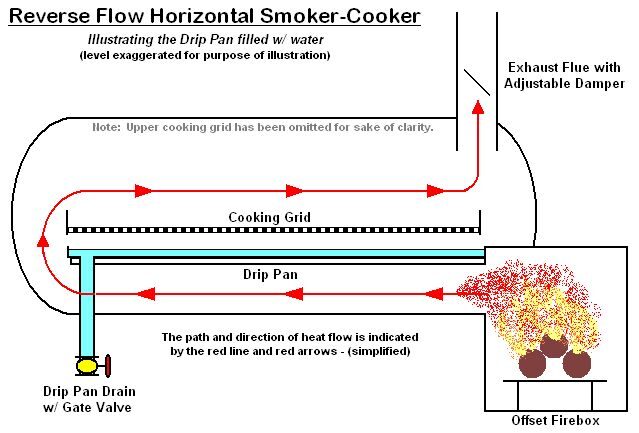
1. Intake Vent (Bottom Vent)
This controls how much oxygen enters the firebox.
Think of this as the gas pedal.
- Open more → Fire gets hotter
- Close down → Fire cools
2. Exhaust Vent (Top Vent / Chimney)
This controls how smoke exits the chamber.
Think of this as your draft control.
Rule of thumb:
Leave the exhaust vent mostly open. Always.
Why? Because closing the exhaust traps dirty smoke inside the chamber and creates bitter flavor.
Temperature is controlled primarily with the intake vent — not the exhaust.
Airflow by Smoker Type
Offset Smokers
Offsets require the most airflow management.
- Keep chimney wide open.
- Adjust temperature with fire size and intake vent.
- Use small, frequent wood splits instead of large logs.
- Maintain a steady coal bed.
Offsets thrive on movement — they are designed for airflow.
Charcoal Kettle Smokers (Weber Style)
Using a two-zone fire:
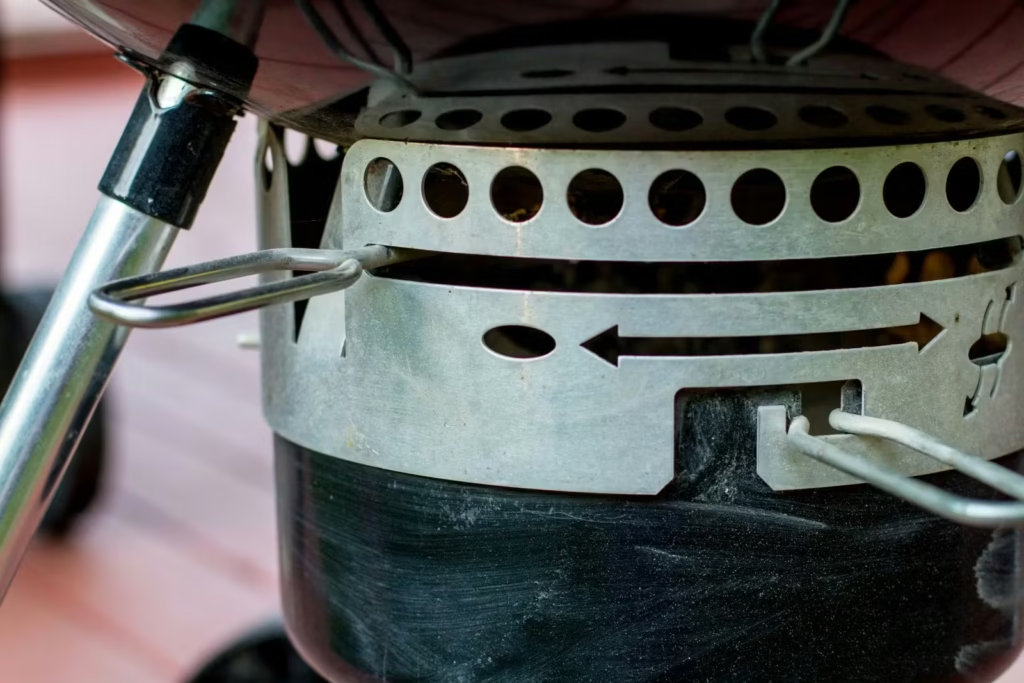
- Bottom vent controls heat.
- Top vent should stay 75–100% open.
- Adjust bottom vent in small increments.
- Make changes slowly — wait 10–15 minutes before adjusting again.
Charcoal reacts slower than wood, so patience is critical.
Pellet Smokers
Pellet smokers automate airflow using internal fans.
You don’t manually control vents, but airflow still matters:
- Keep burn pot clean.
- Avoid overfilling grease tray.
- Ensure chimney cap isn’t choked down too tight.
- Don’t block air channels with foil.
If temps swing wildly, airflow blockage is often the hidden issue.
Vertical Cabinet / Offset Smokers
These rely on controlled intake vents at the bottom.
- Start with vents 50% open.
- Adjust one vent at a time.
- Keep exhaust fully open.
- Avoid constantly lifting the lid (this disrupts airflow pattern).
Small changes make big differences here.
The Clean Smoke Test
Here’s how to know if your airflow is dialed in:
Look at your smoke.
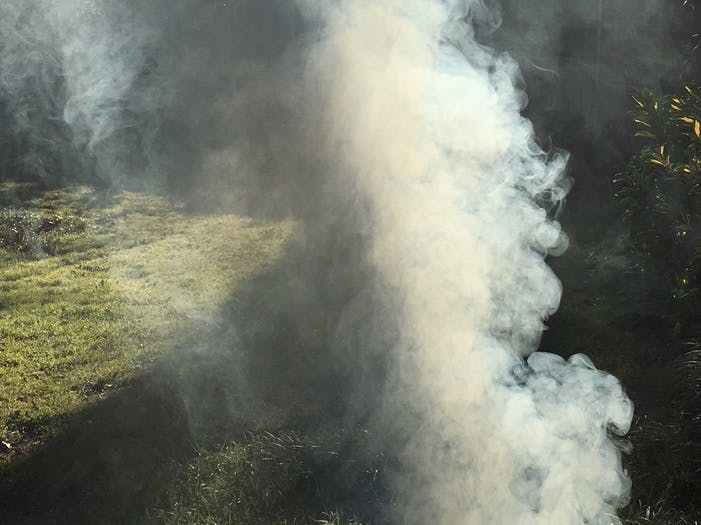
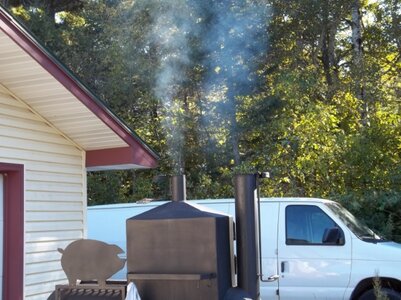
You want:
- Thin
- Light blue or almost invisible
- Clean smelling (not acrid)
You do NOT want:
- Thick white smoke
- Billowing gray clouds
- Bitter smell
If smoke is thick:
- Open intake slightly
- Ensure exhaust is fully open
- Add smaller fuel splits
- Avoid smothering the fire
Common Beginner Mistakes
❌ Closing the Top Vent to Lower Temperature
This traps dirty smoke and ruins flavor.
❌ Overcorrecting Too Quickly
Airflow changes take time. Wait before adjusting again.
❌ Choking the Fire
Smoldering wood produces creosote — the bitter taste nobody wants.
❌ Opening the Lid Too Often
Every time you open it, you reset airflow and temperature. “if your look’n, you ain’t cook’n!”
A Simple Airflow Strategy for Every Cook
- Start with exhaust fully open.
- Build a small, clean-burning fire.
- Use intake vent for temperature adjustments.
- Make small changes.
- Wait, observe, stabilize temperature.
- Then begin the cook then observe for 15 to 20 minutes. Good Start-equals-Great Finishes!
Barbecue rewards patience.
Common BBQ Smoker Airflow Control Problems
Fire Keeps Going Out
If your fire dies, you likely restricted oxygen too much. Open the intake vent slightly and ensure ash is not blocking airflow.
Temperature Spikes
Too much oxygen causes flare-ups. Reduce intake vent gradually and wait 10–15 minutes before adjusting again. Even temperature and blue smoke equals success.
Bitter Smoke Flavor
Thick white smoke means incomplete combustion. Open exhaust fully and avoid smothering the fire.
Smoke Leaking From Doors
Minor leaks are normal. But excessive leaks can disrupt draft flow. Ensure chimney remains fully open to maintain proper air pull.
Why This Matters for Backyard Pitmasters
Learning airflow control gives you:
- Better bark
- Cleaner smoke flavor
- More stable temperatures
- Fewer ruined cooks
- Less stress during long smokes
It’s the difference between guessing and cooking with intention.
If you can control airflow, you can cook on any smoker — anywhere — in any season. New to smoking meats? Check out my [Beginner’s Guide to Smoking].
🔥 Shop BSL Favorites on Amazon!
📄 Get Free BBQ Recipes, Guides & Charts
👉Check out the list of BBQ Gear I recommend and use
🔥 Follow Backyard Smoke Lab for more BBQ tips, recipes, and reviews
📺 YouTube: https://www.youtube.com/@backyardsmokelab
📸 Instagram: https://www.instagram.com/backyardsmokelab
🎵 TikTok: https://www.tiktok.com/@backyardsmoklab
🌐 Website: https://backyardsmokelab.com