If you need an easy game-day appetizer that can feed a crowd, this smoked queso recipe is hard to beat. It combines creamy melted cheese, spicy chorizo, roasted poblano peppers, tomatoes and green chiles with just enough wood smoke to make it taste like it belongs at a backyard BBQ.
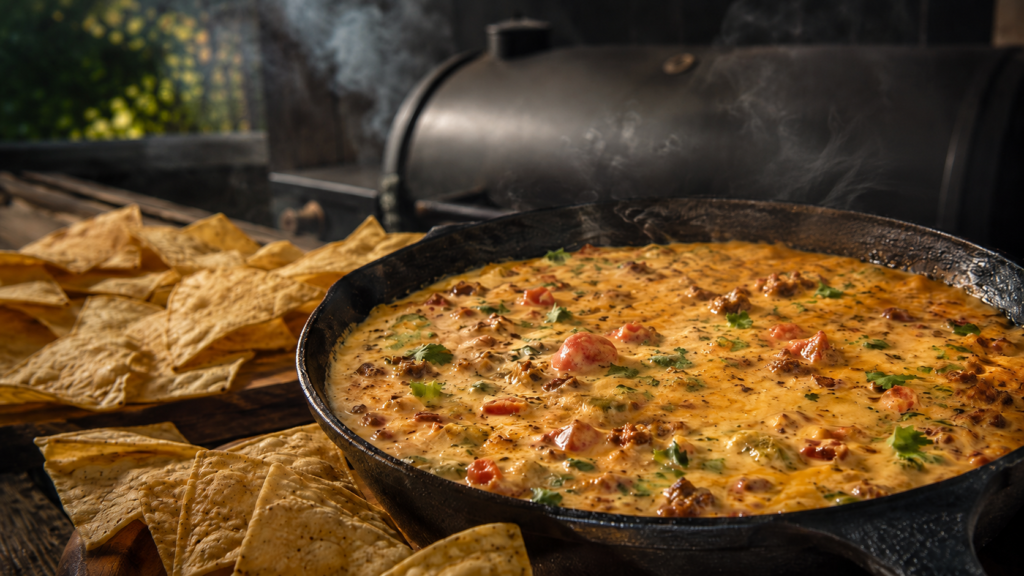
I make my smoked queso a little differently than many recipes. Instead of running the pellet grill hot just to melt the cheese quickly, I smoke it at 225°F and use a smoke tube to give the queso more time to pick up real smoke flavor.
As the queso cooks, a light skin forms across the top where that smoke settles. I stir it back into the queso about every 15 to 20 minutes, which keeps the dip creamy while distributing that smoky flavor throughout the entire pan.
For the meat, I usually reach for Mexican chorizo. But if I’ve got leftover smoked brisket in the freezer, that’s a great excuse to turn it into brisket queso.
And because smoked queso is practically made for football season, I’ll also show you how to make it ahead, transport it, reheat it and keep it warm at a tailgate.
Why You’ll Love This Smoked Queso Recipe
There are plenty of ways to make queso, but putting it on the smoker adds another layer of flavor that you simply don’t get from a saucepan or microwave.
This version is:
- Smoky without being overpowering
- Creamy and scoopable
- Loaded with chorizo and peppers
- Easy to make in a disposable foil pan
- Perfect for a pellet grill
- Easy to customize with leftover BBQ
- Made for game day and tailgating
Even better, most of the work is done before the pan ever reaches the smoker.
Once it’s cooking, your main job is simply to give it a good stir every 15 to 20 minutes.
Smoked Queso at a Glance
Smoker temperature: 225°F
Best smoker: Pellet grill or any smoker set up for indirect heat
Extra smoke: Smoke tube recommended on a pellet smoker
Pan: Disposable aluminum pan or cast-iron dutch oven
Main meat: Mexican chorizo
Brisket option: Substitute chopped leftover smoked brisket
Stir frequency: Every 15–20 minutes
Estimated cook time: About 60–90 minutes, or until completely melted and smooth
Best served with: Sturdy tortilla chips
Smoked Queso Ingredients
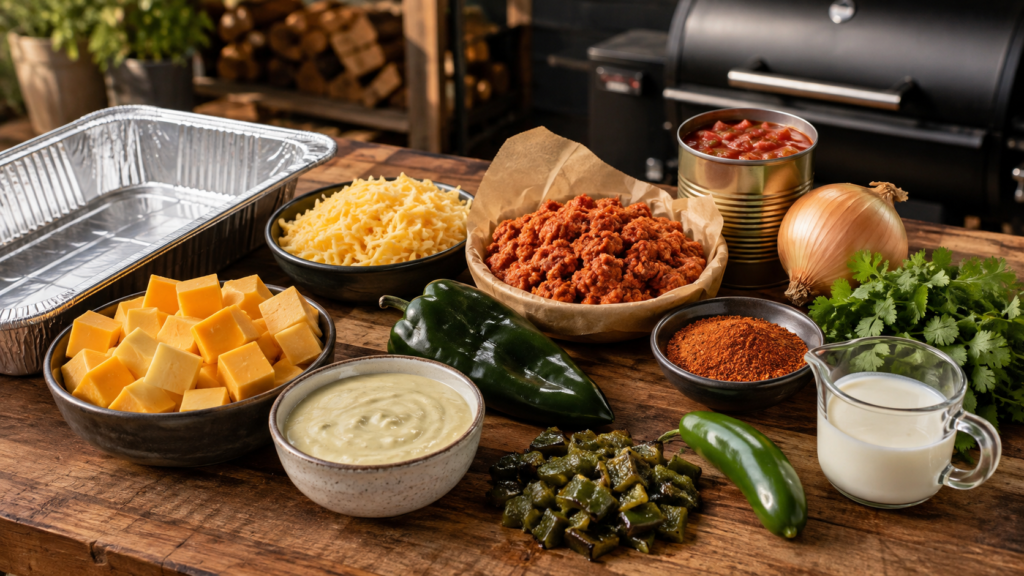
For this smoked queso dip, you’ll need:
- 2 pounds Velveeta cheese, cut into cubes
- 12–16 ounces smoked Gouda, shredded or cubed
- 1 pound Mexican chorizo
- 1 medium poblano pepper
- 1 small yellow onion, finely diced
- 1 10-ounce can Rotel diced tomatoes and green chiles, undrained
- 1 can cream of poblano or cream of jalapeño soup
- 1–2 tablespoons BSL Basic BBQ Rub, to taste
- Chopped fresh cilantro, to taste
- 1 jalapeño, diced, optional for additional heat
- Small splash of milk or beer, optional for thinning
Can You Use Brisket Instead of Chorizo?
Absolutely.
Chorizo is my normal choice because it’s inexpensive, easy to find and brings plenty of chile, garlic and spice to the queso.
But leftover brisket is one of the best smoked queso upgrades you can make.
If I have smoked brisket in the freezer, I’ll substitute roughly 1 to 1½ pounds of chopped brisket for the chorizo.
Don’t feel like you need to smoke an entire brisket just to make queso. Think of this variation as one more good way to use leftovers from a previous cook.
Equipment You’ll Need
You don’t need much equipment for smoked queso:
- Pellet grill or smoker
- Disposable aluminum pan or cast-iron dutch oven
- Smoke tube if using a pellet grill
- Large spoon or heat-resistant spatula
- Heat-resistant BBQ gloves
- Knife and cutting board
For tailgating, I usually prefer a disposable foil pan because it’s lighter, easier to transport and requires almost no cleanup afterward.
We’ll talk more about foil pans versus cast iron below.
How to Make Smoked Queso
1. Preheat the Pellet Smoker to 225°F
Set your pellet smoker to 225°F.
I prefer the lower temperature because queso doesn’t need high heat to cook. The cheese simply needs to melt, and the extra time at 225°F allows the ingredients to spend more time exposed to smoke.
If you’re using a pellet grill, this is also when I prepare my smoke tube.
2. Light the Smoke Tube
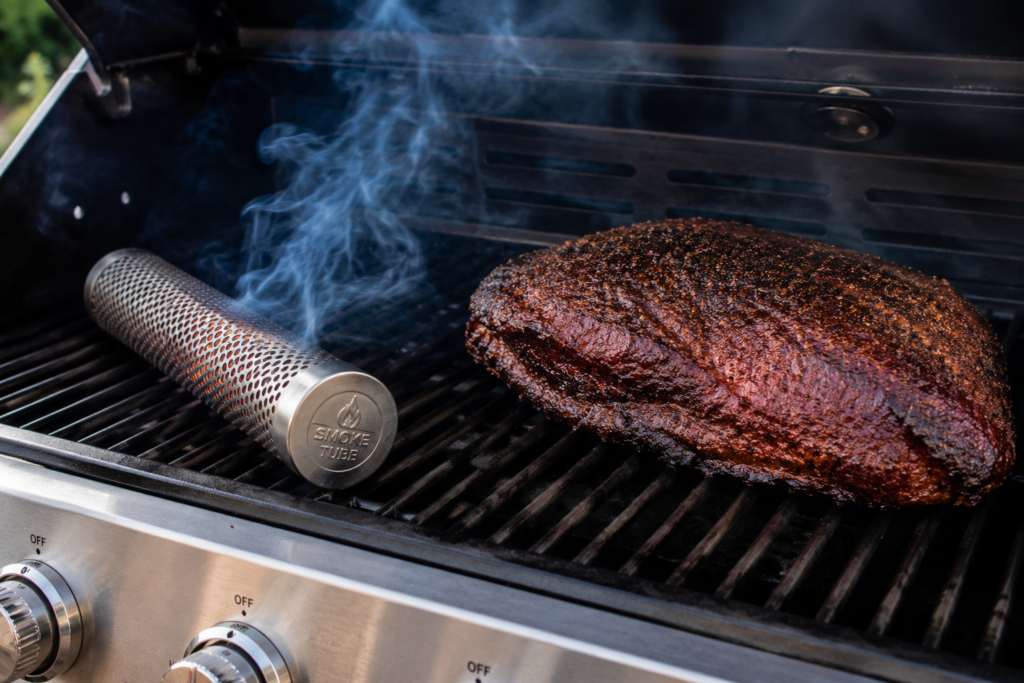
Fill your smoke tube with pellets and light it according to the manufacturer’s directions.
Once the pellets are burning properly and producing steady smoke, place the tube inside your pellet smoker where it won’t interfere with the queso pan.
You don’t absolutely need a smoke tube to make pellet grill queso.
But if you like more noticeable smoke flavor, I think it makes a difference.
Pellet grills are incredibly convenient, but at low temperatures I still like the additional concentrated smoke from the tube for a recipe like this.
3. Cook the Chorizo
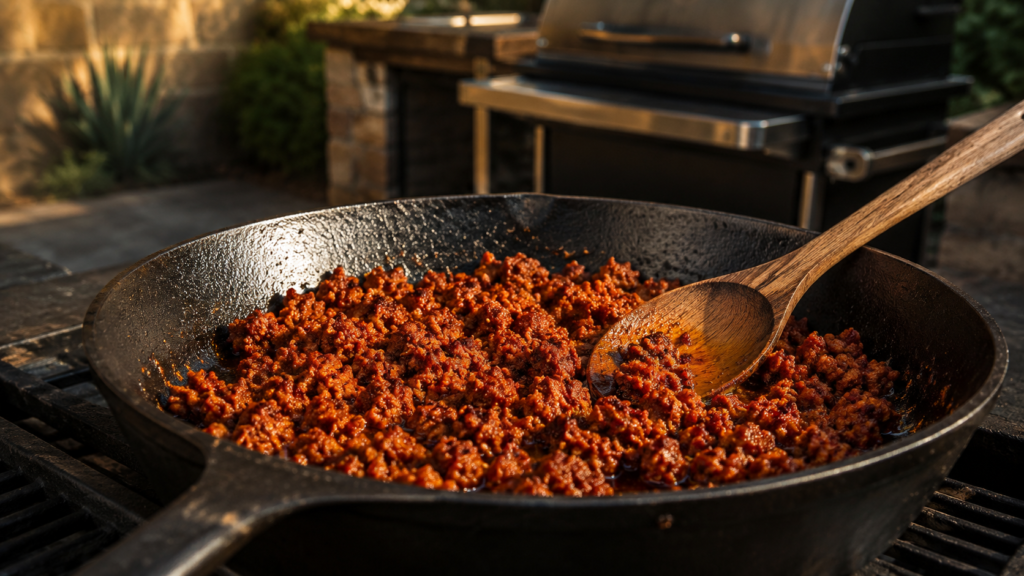
Brown the Mexican chorizo in a skillet over medium heat.
Break it apart as it cooks, then drain away excessive grease before adding the meat to the queso.
You want some of that chorizo character in the finished dip, but you don’t need a puddle of grease floating on top.
If you’re using leftover brisket instead, there’s no need to precook it. Chop the brisket into bite-size pieces and add it directly to the pan.
4. Prepare the Poblano and Onion
Roast or char the poblano until it begins to soften and develop some color.
Remove the seeds and dice it.
Finely dice the onion as well.
The poblano brings a mild earthy pepper flavor without making the queso excessively hot. If you want more heat, add some diced jalapeño separately.
5. Assemble the Queso
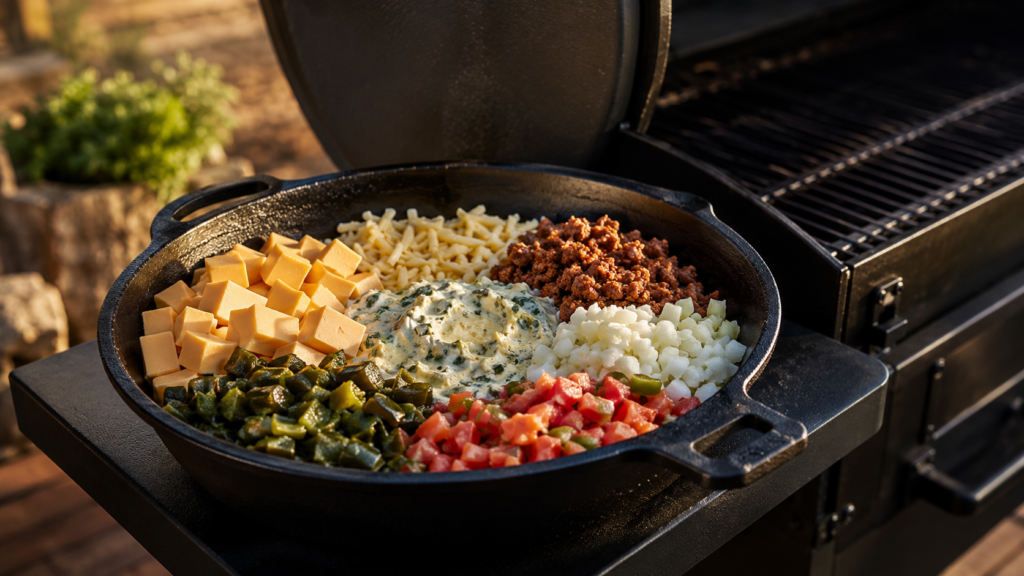
Add the cubed Velveeta to your foil pan or cast-iron skillet.
Add:
- Smoked Gouda
- Cooked chorizo
- Roasted poblano
- Onion
- Rotel and its liquid
- Cream of poblano or jalapeño soup
- BSL Basic BBQ Rub
You don’t have to completely mix everything before it goes on the smoker.
As the cheese melts, you’ll stir the ingredients together several times.
6. Smoke the Queso at 225°F
Place the uncovered pan in the smoker.
Let the queso begin heating and melting.
After about 15 to 20 minutes, open the smoker and give everything a thorough stir.
Continue smoking and stirring about every 15 to 20 minutes until the cheeses are completely melted and all the ingredients are evenly combined.
Depending on your smoker, outdoor temperature, pan and ingredient temperature, plan on roughly 60 to 90 minutes.
Don’t cook strictly by the clock.
The queso is done when everything has melted together and you’ve reached the consistency you want.
7. Adjust the Consistency
If the finished smoked queso is thicker than you’d like, add a small splash of milk or beer and stir.
Start small.
You can always add another splash, but it’s much harder to fix queso that’s become too thin.
Remember that queso will also thicken as it cools.
8. Finish and Serve
Once the queso is smooth and creamy, stir in fresh chopped cilantro.
Taste it and adjust the seasoning if necessary.
Serve immediately with sturdy tortilla chips.
And use sturdy chips.
This is not the occasion for a paper-thin tortilla chip that snaps the second it hits the queso.
Why I Smoke Queso at 225°F
You’ll see smoked queso recipes cooked at many different temperatures.
I prefer 225°F because I’m not trying to cook the queso as fast as possible.
I’m trying to add smoke flavor.
At 225°F, the cheese melts gradually while the uncovered surface stays exposed to smoke.
On my pellet smoker, I combine that low cooking temperature with a smoke tube.
The combination gives the queso plenty of time to develop that subtle BBQ character without needing to blast it with high heat.
If your only goal is to melt the ingredients quickly, you can certainly cook queso hotter.
But if you’re already firing up a smoker, I think it’s worth letting the smoke actually contribute something.
Why You Should Stir Smoked Queso Every 15 to 20 Minutes
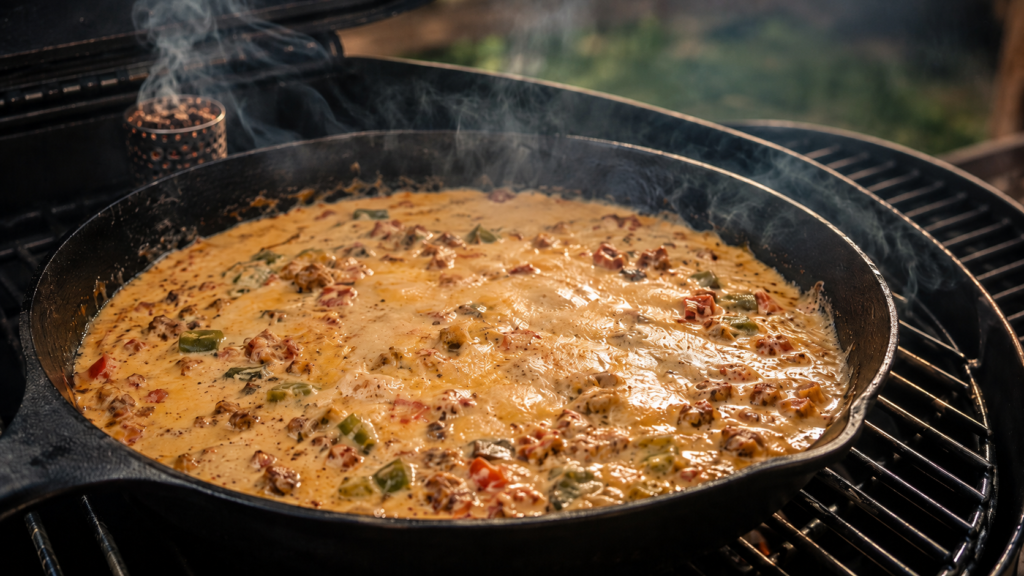
This is one of the most important parts of my smoked queso method.
When I cook queso at 225°F with a smoke tube, I notice that a light skin forms on the surface.
That’s normal.
Because the top of the queso is directly exposed to the circulating smoke, that surface layer also picks up a concentrated amount of smoky flavor.
Instead of letting that layer sit on top for the entire cook, I stir it back into the queso every 15 to 20 minutes.
That does three things:
- Keeps the surface from becoming too firm
- Helps the cheese melt evenly
- Distributes the smoke flavor throughout the dip
After you stir, a fresh surface is exposed to the smoke.
Then 15 or 20 minutes later, you repeat the process.
That’s one reason I don’t simply put the queso on the smoker for an hour and forget about it.
The stirring is part of how I build smoke flavor into the dip.
How Much Smoke Does Queso Need?
Queso doesn’t need hours and hours of heavy smoke.
Unlike a pork shoulder or brisket, the entire top of the pan is exposed directly to the smoke.
That gives you a lot of surface area for smoke to interact with the cheese.
On a pellet smoker, I like using a smoke tube at 225°F because it gives me a more noticeable smoke profile.
But more isn’t always better.
The goal is for someone to take a bite and notice that the queso was cooked outside over wood smoke—not feel like they’re eating a campfire.
That’s another reason the frequent stirring helps.
Instead of leaving all of the concentrated smoke flavor sitting in one surface layer, you’re incorporating it throughout the pan.
If you’re struggling to get noticeable smoke flavor from your pellet cooker, see our guide on How to Get More Smoke Flavor From a Pellet Smoker.
Best Pellets for Smoked Queso
You don’t need an aggressive wood flavor for queso.
Good choices include:
- Hickory
- Oak
- Pecan
- Competition blends
- Mild mesquite blends
Hickory is a particularly easy pairing with chorizo and smoked cheese.
For a milder result, use oak or a balanced competition blend.
Since we’re also using a smoke tube, I wouldn’t obsess over finding the strongest pellet available. We’re trying to complement the cheese and peppers, not cover them up.
Foil Pan vs Cast Iron for Smoked Queso
Both work.
But they serve slightly different purposes.
Cast Iron
Cast iron is excellent if you’re making smoked queso at home.
It retains heat well, looks great when served directly from the skillet and is sturdy enough to use over and over.
The disadvantages are weight and cleanup.
A cast iron dutch oven full of hot melted cheese isn’t something I particularly want to carry through a parking lot.
Disposable Foil Pan
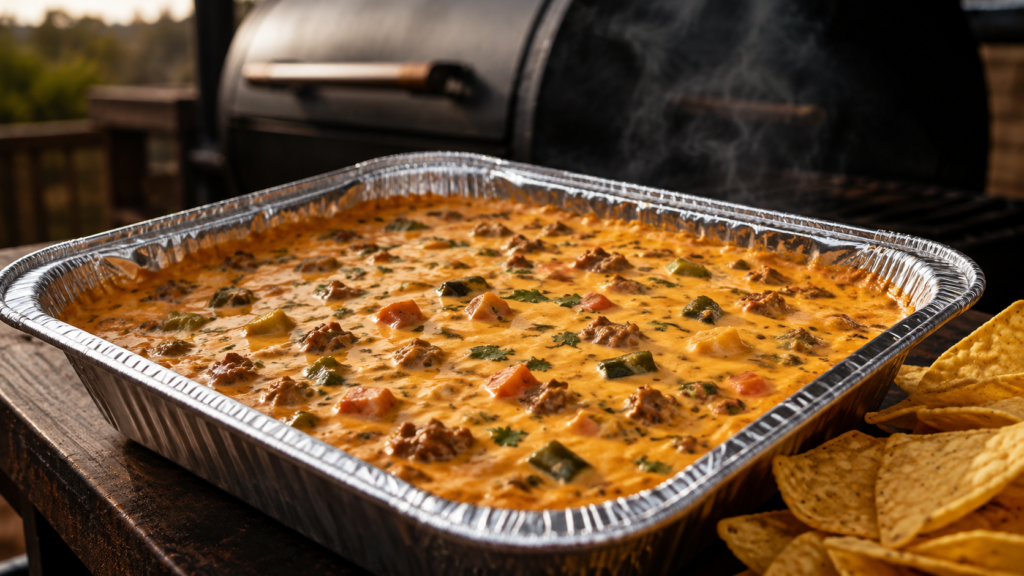
For a smoked queso tailgate recipe, I prefer a disposable aluminum pan.
You can:
- Assemble the queso in it
- Smoke the queso in it
- Cover it for transportation
- Reheat it
- Serve directly from it
- Dispose of it when you’re finished
That’s hard to beat for tailgate convenience.
Use a reasonably sturdy foil pan, and if necessary, place one pan inside another for additional support.
How to Make Smoked Queso for Tailgating
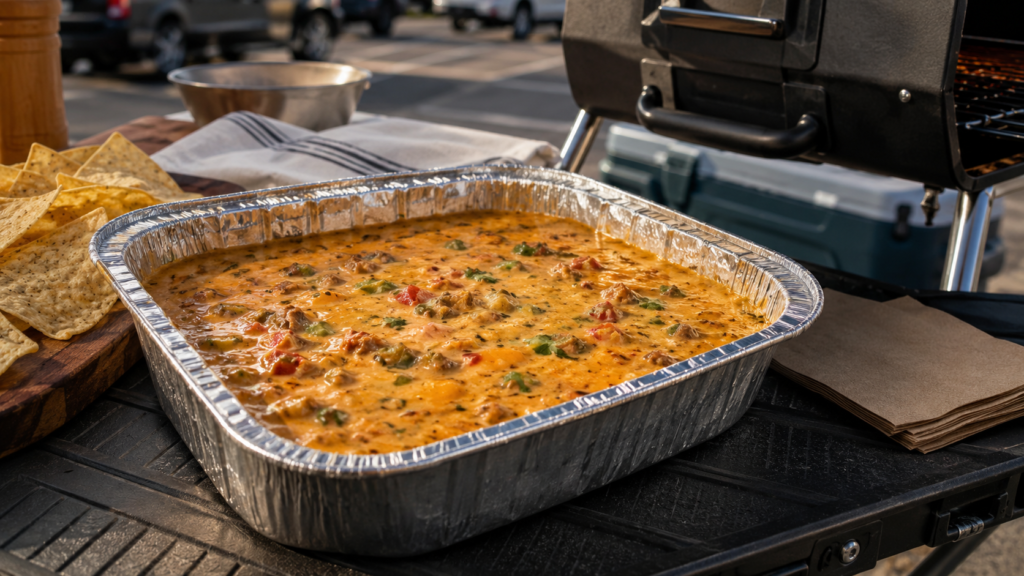
Making great queso at home is easy.
Getting that queso to a football tailgate while it’s still safe, warm and scoopable takes a little more planning.
Here’s how I’d approach it.
Can You Make Smoked Queso Ahead of Time?
Yes.
You can smoke the queso ahead of time, cool it properly and refrigerate it until you’re ready to leave.
For the best texture, don’t thin the queso too aggressively during the initial cook.
You can always adjust the consistency when reheating.
If your tailgate is later the same day and you can safely keep the queso hot, you can also transport it warm rather than chilling it first.
How to Transport Smoked Queso
For a tailgate, cover the foil pan tightly with heavy-duty aluminum foil.
Because a full pan of queso is heavy and hot, I like the idea of placing it inside an insulated food carrier or sturdy cooler used specifically for transporting hot food.
Keep the pan level.
A vehicle floor or flat cargo area is much safer than balancing several pounds of molten cheese on a seat.
And don’t forget BBQ gloves.
The pan itself can remain hot long after you remove it from the smoker.
How Do You Reheat Smoked Queso at a Tailgate?
You have several options depending on your setup.
If you’re bringing a portable grill or smoker, reheat the queso over gentle indirect heat.
Stir frequently as it warms.
You can also transfer it to a slow cooker if you have access to power.
If the queso becomes too thick during reheating, add a small splash of milk and stir until the texture loosens.
Avoid pouring in a large amount at once.
For tailgate cooking equipment ideas, check out our guide to the Best Tailgate Grills in 2026.
How to Keep Queso Warm at a Tailgate
Once the queso is hot, the goal changes from cooking it to maintaining it.
Keep it over very low indirect heat or use a slow cooker on its warm setting when power is available.
Stir it periodically so the edges don’t become hotter or thicker than the middle.
If you’re using a grill, never place a thin foil pan directly over intense flames.
The cheese along the bottom can scorch long before the rest of the queso needs additional heat.
How Much Smoked Queso Per Person?
For an appetizer where there will be several other foods available, plan roughly 3 to 4 ounces of queso per person.
For 10 people, that’s roughly 2 to 2½ pounds of finished queso.
If queso is one of the main attractions—or you’re feeding a crowd that considers tortilla chips a competitive sport—make more.
For a game-day spread, pair it with other crowd-friendly foods such as Gameday Chicken Wings, Smoked Pulled Pork Nachos or Smoked Party Ribs.
Best Meat for Smoked Queso
One of the advantages of smoked queso is how easily you can change the meat.
Mexican Chorizo
This is my go-to.
Chorizo gives queso spice, chile flavor and richness without requiring a complicated seasoning blend.
Cook and drain it before adding it to the cheese.
Smoked Brisket
If you’ve already got smoked brisket, use it.
Chopped brisket turns smoked queso into a much more BBQ-forward appetizer and is an excellent way to use leftovers.
I like roughly 1 to 1½ pounds of brisket in this size batch.
Pulled Pork
Leftover smoked pulled pork also works.
Chop or pull it into relatively small pieces so you’re still able to scoop the queso easily with tortilla chips.
Breakfast Sausage
Hot breakfast sausage is another simple option if chorizo isn’t available.
Ground Beef
Ground beef works, but it doesn’t bring as much flavor on its own.
Season it well before adding it to the queso.
How to Make Smoked Queso Spicier
It’s easy to adjust the heat.
For more spice:
- Use hot Rotel
- Add diced jalapeños
- Leave some jalapeño seeds in
- Use cream of jalapeño soup
- Add pepper jack cheese
- Increase the spicy BBQ seasoning
- Use hot Mexican chorizo
For a milder queso, use mild Rotel, poblano instead of jalapeño and a milder sausage.
Remember that you can always put sliced jalapeños on the side.
That’s particularly useful at a party where not everyone has the same definition of “a little spicy.”
How to Keep Smoked Queso From Getting Too Thick
Smoked queso gets thicker as it cools.
That’s normal.
If it becomes too thick while it’s still on the smoker, stir in a small amount of milk or beer.
If it thickens during serving, warm it gently and add another small splash if necessary.
Don’t dump a cup of liquid into the pan trying to fix it quickly.
Add a little, stir and evaluate.
Can You Make Smoked Queso Without Meat?
Yes.
Leave the meat out and increase the peppers, onions or cheese if you’d like.
A meatless version still benefits from the wood smoke and roasted poblano.
Just remember that removing seasoned chorizo also removes quite a bit of flavor, so taste the finished queso and adjust your BBQ seasoning accordingly.
How to Store Leftover Smoked Queso
Let leftover queso cool and transfer it to an airtight container before refrigerating.
Reheat only the amount you plan to eat.
Because reheated queso tends to thicken, add a small splash of milk while warming if necessary.
Stir frequently until the texture becomes smooth again.
Smoked Queso FAQ
What Temperature Should You Smoke Queso At?
I smoke queso at 225°F on my pellet smoker. The lower temperature gives the queso more time in the smoke while the cheese gradually melts.
How Long Does Smoked Queso Take at 225°F?
Plan on approximately 60 to 90 minutes, but use the texture rather than the clock as your final test. The queso is ready when all of the cheese has melted and the ingredients are completely incorporated.
Smoker temperature, outdoor weather, pan size and the starting temperature of your ingredients can all affect the cooking time. Warm it to temperature of at least 165 degrees.
How Often Should You Stir Smoked Queso?
At 225°F, I stir smoked queso approximately every 15 to 20 minutes.
This keeps the surface smooth and works the smoke-rich layer that forms on top back into the queso.
Do You Need a Smoke Tube for Pellet Grill Queso?
No, but I use one.
A smoke tube gives me more noticeable smoke flavor from my pellet smoker, particularly when I’m cooking something relatively quickly like queso.
Can I Smoke Queso in a Disposable Aluminum Pan?
Yes.
In fact, a disposable foil pan is my preferred choice for tailgating because you can cook, transport, reheat and serve the queso from the same pan.
What Is the Best Meat for Smoked Queso?
Mexican chorizo is my standard choice because it brings spice and plenty of flavor.
Leftover smoked brisket is my favorite BBQ variation when I have some available.
What Cheese Is Best for Smoked Queso?
A combination of a reliable melting cheese such as Velveeta and a more flavorful cheese such as smoked Gouda works especially well.
The Velveeta provides the smooth texture while the Gouda adds more cheese and smoke character.
Can You Make Smoked Queso the Day Before a Tailgate?
Yes.
Smoke it, refrigerate it safely and reheat it slowly before serving.
Wait until reheating before making any final consistency adjustments because the queso will thicken significantly when chilled.
Final Thoughts
Smoked queso isn’t difficult.
But a few small changes make it much better than simply tossing a block of cheese into a smoker.
I cook mine at 225°F, add a smoke tube when I’m using the pellet grill and stir the queso every 15 to 20 minutes.
That stirring step is especially important.
The surface develops a light skin that gets plenty of smoke exposure. Instead of letting that concentrated smoky layer stay on top, I stir it right back into the queso and expose a fresh layer to the smoke.
Mexican chorizo is my normal meat choice, while leftover smoked brisket is the upgrade when I’ve got some in the freezer.
Put all of that in a disposable foil pan and you’ve also got one of the easiest BBQ appetizers to cook, transport, reheat and serve at a football tailgate.
Grab the tortilla chips and don’t expect leftovers.
🔥 Shop BSL Favorites on Amazon!
📄 Get Free BBQ Recipes, Guides & Charts
👉Check out the list of BBQ Gear I recommend and use
🔥 Follow Backyard Smoke Lab for more BBQ tips, recipes, and reviews
📺 YouTube: https://www.youtube.com/@backyardsmokelab
📸 Instagram: https://www.instagram.com/backyardsmokelab
🎵 TikTok: https://www.tiktok.com/@backyardsmoklab
🌐 Website: https://backyardsmokelab.com